
Most advice about stress is a list: breathe, exercise, sleep, meditate. The trouble is that a list doesn’t tell you which technique to use, when, or how much to expect from it. A breathing exercise can calm you in the middle of a meeting, but it won’t fix a workload that is too big. A walk helps most days, but it won’t resolve a conflict at home.
This guide sorts stress management techniques by what they actually do and how well research supports them, so you can build a small toolkit that suits your life. It focuses on techniques. For what negative stress is and what it does to the body, see our guide to negative stress. It is general information, not medical advice.
In short
- Start with one question: can I change the source of this stress? If yes, use problem-solving. If not, change how you respond and recover.
- Quick tools, such as slow breathing and grounding, lower stress in the moment. Daily habits, such as sleep and movement, stop it building up.
- Thinking skills from cognitive behavioural therapy (CBT) have some of the strongest evidence for lasting change.
- Alcohol, doomscrolling and avoidance feel like relief but usually make stress worse.
- If stress lasts for weeks and affects your sleep, work or relationships, speak to a doctor or mental health professional.
First, ask: can I change this?
Psychologists Lazarus and Folkman described two broad ways of coping:
- Problem-focused coping aims to change the situation: breaking a task down, asking for help, setting a boundary, negotiating a deadline.
- Emotion-focused coping aims to change your response: calming your body, reframing unhelpful thoughts, talking to someone, accepting what can’t be changed.
Neither is better in general. The skill is matching the technique to the situation:
- If you can change the stressor, start with problem-solving.
- If you can’t change it, such as an illness, a delay or another person’s behaviour, put your effort into your response and your recovery.
- Most situations need a bit of both, plus rest.
Quick techniques for the moment (one to five minutes)
These lower the intensity of stress when it spikes. They don’t remove the cause, but they help you think clearly enough to deal with it.
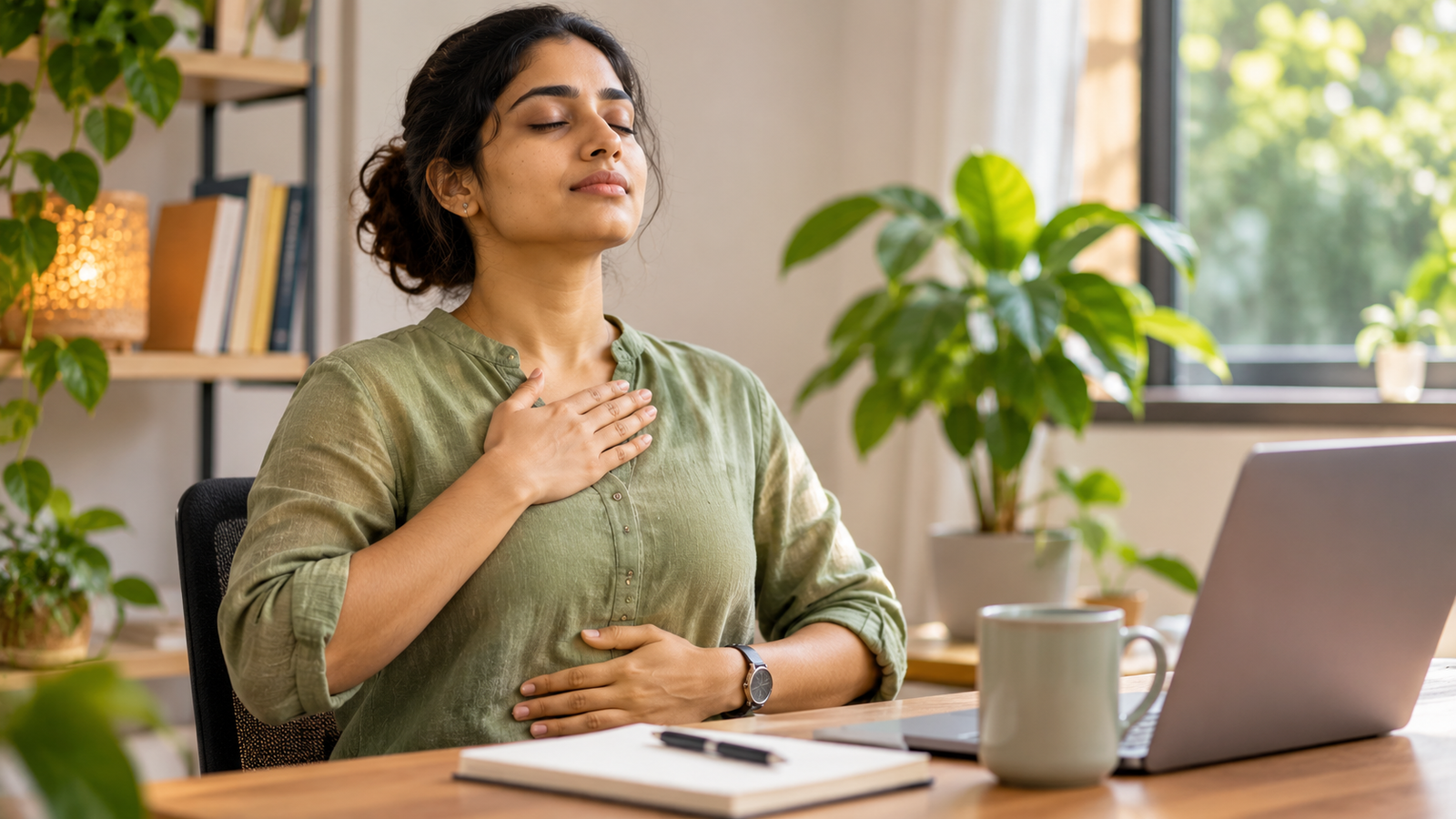
- Slow breathing. Breathe in through your nose, then out slowly through your mouth, with a longer breath out than in, for a minute or two. If you have a heart or lung condition, avoid forced breathing or breath-holding.
- Grounding. Name five things you can see, four you can touch, three you can hear, two you can smell and one you can taste. It pulls attention back to the present.
- A short muscle release. Tense a group of muscles, such as your shoulders or hands, for a few seconds, then let go and notice the difference. Work through a few areas.
- Move. Stand up, stretch or walk for a few minutes.
- Name the feeling. Saying “I’m feeling overwhelmed” can take some of the edge off. Some research on putting feelings into words suggests this helps regulate emotion.
- Pause before responding. Before replying to a tense email or an argument, wait ten minutes if you can.
- A brain dump. Write down everything on your mind, then circle the one thing to do next.
The World Health Organization’s self-help guide Doing What Matters in Times of Stress teaches several of these skills in a simple illustrated format.
Daily foundations: stop stress piling up
Stress rarely comes from one event. It builds when you have little recovery. These habits create a buffer:
- Sleep. Keep regular hours and wind down without screens. Sleep loss makes almost every stressor feel bigger.
- Movement. Regular activity is one of the most reliable ways to reduce stress over time. See our guide to exercise for mental health.
- Food and water. Regular meals and hydration steady your energy and mood.
- Caffeine, nicotine and alcohol. All can worsen anxiety and sleep.
- Daylight and time outdoors.
- Routine and breaks. Work in focused blocks with short breaks, and keep a regular rhythm to your day.
- Digital limits. Constant news and social media keep the alarm on. Our guide to how to overcome social media addiction offers a step-by-step plan.
Thinking skills from CBT
Stress depends heavily on how you judge a demand against the resources you believe you have. Stress-fuelling thinking tends to follow patterns:
- Catastrophising: “If this goes wrong, everything is ruined.”
- All-or-nothing thinking: “If it isn’t perfect, it’s a failure.”
- Mind-reading: “They think I’m incompetent.”
- “Should” rules: “I should be able to handle this on my own.”
- Overgeneralising: “This always happens to me.”
You can work with these thoughts in a few steps:
- Notice the thought and write it down.
- Ask what the evidence is for and against it.
- Ask what else could be true, and what you would say to a friend in your position.
- Ask what is most likely, not just what is worst.
- Decide what, if anything, you can do about it, and do the next small step.
Two more skills help. Worry time means setting aside a short, fixed window each day to think through worries, and postponing them the rest of the time. Acceptance means putting your energy into what you can influence, and letting go of what you can’t. These skills are central to cognitive behavioural therapy, and a therapist can teach them properly.
Practical problem-solving and time management
When the stress comes from too much to do:
- List everything, then sort by urgent and important
- Break big tasks into small, concrete steps
- Do one thing at a time, and limit multitasking
- Block time for focused work and for rest
- Say no or negotiate deadlines when you are over capacity
- Delegate or ask for help early, not at breaking point
- Clarify expectations instead of guessing
- Set a stop time for work and protect it
Mind-body practices
- Mindfulness meditation. Structured programmes, such as eight-week mindfulness-based stress reduction, have been studied extensively. A review by Goyal and colleagues found moderate evidence of benefit for anxiety, depression and pain, and weaker evidence for stress and quality of life. Start with short, guided sessions.
- Yoga and tai chi. Gentle movement combined with breath and attention helps many people relax. Research is encouraging but mixed in quality.
- Slow breathing practices, including gentle pranayama. These may reduce tension for some people, and the evidence is modest. Avoid forceful breathing or long breath-holds if you have a heart, blood-pressure or lung condition, and check with a doctor first.
If a practice makes you more anxious, stop and speak to a professional. Our Wellness Center page describes the wellbeing practices we offer alongside clinical care.
Connection and restoration
- Talk to someone you trust. You don’t need a solution, just a listener.
- Ask for what you need, in specific terms: “Can you take the school pickup on Thursday?”
- Join a group that gives you company, such as a walking group, a faith or community group, or a peer support group.
- Make time for things that restore you: hobbies, music, time outdoors, prayer or reflection, laughter, play.
- Rest without guilt. Recovery is part of managing stress, not a reward for finishing everything.
Evidence at a glance
| Technique | Best for | Time needed | How well supported |
|---|---|---|---|
| Regular physical activity | Everyday stress, mood and sleep | Ongoing | Stronger evidence |
| CBT-based stress management skills | Persistent or work-related stress | Weeks of practice | Stronger evidence |
| Good sleep habits | Almost every kind of stress | Ongoing | Strong rationale, mostly indirect evidence |
| Slow breathing and relaxation | Tension in the moment | Minutes | Moderate, effects often short-term |
| Mindfulness-based programmes | Ongoing stress, anxiety, low mood | Around eight weeks | Moderate |
| Yoga and tai chi | General relaxation and wellbeing | Ongoing | Moderate to mixed |
| Problem-solving and time management | Specific, solvable stressors | Varies | Practical rationale, stronger inside CBT programmes |
| Social support | All kinds of stress | Ongoing | Strong association with better coping |
| Journaling | Processing events and feelings | Ten to twenty minutes | Mixed |
| Music, nature and hobbies | Restoration | Varies | Limited, but low risk |
These are broad, group-level summaries, written cautiously. Individual responses vary, so treat this as a guide to what to try first, not a ranking of what will work for you.
What doesn’t help, or backfires
- Alcohol, tobacco, cannabis or sedatives. They may feel like relief, but usually worsen anxiety, sleep and mood, and can lead to dependence. Our guides to alcohol use disorder vs heavy drinking and dual diagnosis explain why.
- Doomscrolling. Endless news and feeds keep the alarm switched on.
- Skipping meals or overeating to cope.
- Avoiding the problem. Avoidance brings short-term relief and a bigger problem later.
- Working longer to catch up, which usually deepens exhaustion.
- Venting without action. Replaying a grievance repeatedly can keep stress high, while talking it through and then deciding on a step helps.
- Forced positivity. Telling yourself to “just stay positive” can add pressure. Acknowledging that something is hard is more useful.
Build your own plan
- Map your stressors. List your top three, and mark each as something you can change, influence or can’t change.
- Choose three techniques: one quick tool, one daily habit and one thinking skill.
- Practise for two weeks, linking each to something you already do, such as breathing after you sit at your desk or a walk after dinner.
- Review. Keep a short stress diary, rating stress from zero to ten. Note what helped and what didn’t, then adjust.
- Add support. Tell someone what you’re trying, and ask them to check in.
An illustrative starter plan:
| Week | Quick tool | Daily habit | Thinking or practical skill |
|---|---|---|---|
| 1 | Three minutes of slow breathing, once a day | A ten-minute walk, four days | Write down the day’s main stressors each evening |
| 2 | Grounding when stress spikes | Fixed bedtime and a screen-free wind-down | Question one stressful thought daily, using the five steps |
| 3 onward | Use both as needed | Add a second movement session or a hobby | Set one boundary, such as a stop time for work |
Adjust it to your life. Small and regular works better than ambitious and abandoned.
Techniques for specific situations
- At work. Clarify priorities with your manager, take your breaks, leave on time where you can, and separate work and personal devices. If stress is affecting your health, a doctor can advise on treatment and time off.
- Students. Break revision into small blocks, sleep properly, move daily, and talk to a teacher, counsellor or family member. Exam results do not define your worth.
- Caregivers. Accept help, share tasks, and protect some time for yourself. Caregiver stress is common, and addressing it is not selfish.
- Parents. Aim for “good enough”, not perfect, and share the load where you can.
When techniques aren’t enough
Stress management skills help most people, but some situations need more. Speak to a doctor, psychiatrist or clinical psychologist if:
- Stress has lasted for weeks and doesn’t ease when circumstances improve
- You can’t sleep, or feel constantly exhausted
- You have panic attacks, constant worry or persistent low mood
- You are drinking or using substances to cope
- Stress is damaging your work, studies or relationships
- You feel hopeless or numb
Professional help can include talking therapy such as CBT, treatment for anxiety or depression where they have developed, and treatment of any substance use alongside. Our guides to how to tackle mental health issues and why we get anxiety explain what to expect.
If you feel hopeless or are having thoughts of self-harm, please reach out now. You are not alone. In India, the free national tele-mental-health helpline Tele-MANAS (14416) offers support, and in an emergency you can call 112. Chest pain, severe breathlessness or fainting need urgent medical attention.
How Thamarai can help
At Thamarai Healing Center in Pollachi, care for stress-related difficulties begins with a comprehensive medical and psychiatric assessment, so that the full picture is understood, including anxiety, low mood, sleep problems and any substance use. Our multidisciplinary team includes a consultant psychiatrist and a consultant psychologist, and care combines evidence-based therapies such as Behavioural Therapy with wellbeing practices, in a calm, private, residential setting. You can read more about our anxiety disorder and mental illness treatment care.
If stress is taking over, a confidential conversation is a good place to start. Speak to our team confidentially →
Frequently asked questions
What are the best stress management techniques?
There’s no single best one. A good toolkit combines a quick calming tool, daily habits such as sleep and movement, thinking skills from CBT, practical problem-solving and social support. The best choice depends on the cause of the stress and what you will actually keep doing.
How can I reduce stress quickly?
Slow breathing with a longer breath out, grounding, a short walk, a brief muscle release or a ten-minute pause can lower stress in the moment. They reduce intensity but don’t remove the cause.
What are the four As of stress management?
A popular framework: avoid unnecessary stress, alter the situation, accept what you can’t change, and adapt your response. It maps closely onto problem-focused and emotion-focused coping.
Do breathing exercises really work for stress?
Slow breathing can calm the body’s stress response in the moment, though effects are often short-term. It works best as one tool among several. Avoid forceful breathing or breath-holding if you have a heart or lung condition.
Is exercise good for stress?
Yes. Regular physical activity is linked with lower stress and better mood and sleep, and it is one of the better-supported techniques. Even short daily walks help.
How long does it take for stress management techniques to work?
Quick tools can help within minutes. Habits and thinking skills usually take a few weeks of regular practice to make a noticeable difference.
Can stress management help with anxiety?
It helps many people, particularly CBT-based skills, and some techniques overlap with anxiety treatment. If anxiety is persistent or severe, professional assessment is advisable.
When should I see a doctor about stress?
If stress lasts for weeks, affects your sleep, work or relationships, leads you to use alcohol or other substances, or comes with panic, hopelessness or thoughts of self-harm.
This article is for general information and isn’t a substitute for professional medical advice, diagnosis or treatment.
Sources
- Lazarus RS, Folkman S. Stress, Appraisal, and Coping. Springer, 1984.
- Richardson KM, Rothstein HR. Effects of occupational stress management intervention programs: a meta-analysis. Journal of Occupational Health Psychology, 2008.
- Goyal M, Singh S, Sibinga EMS, et al. Meditation programs for psychological stress and well-being: a systematic review and meta-analysis. JAMA Internal Medicine, 2014.
- Lieberman MD, Eisenberger NI, Crockett MJ, et al. Putting feelings into words: affect labeling disrupts amygdala activity in response to affective stimuli. Psychological Science, 2007.
- World Health Organization. Doing What Matters in Times of Stress: An Illustrated Guide. 2020.
- World Health Organization. WHO guidelines on physical activity and sedentary behaviour. 2020.
- National Institute of Mental Health (NIMH). I’m So Stressed Out! Fact Sheet.