
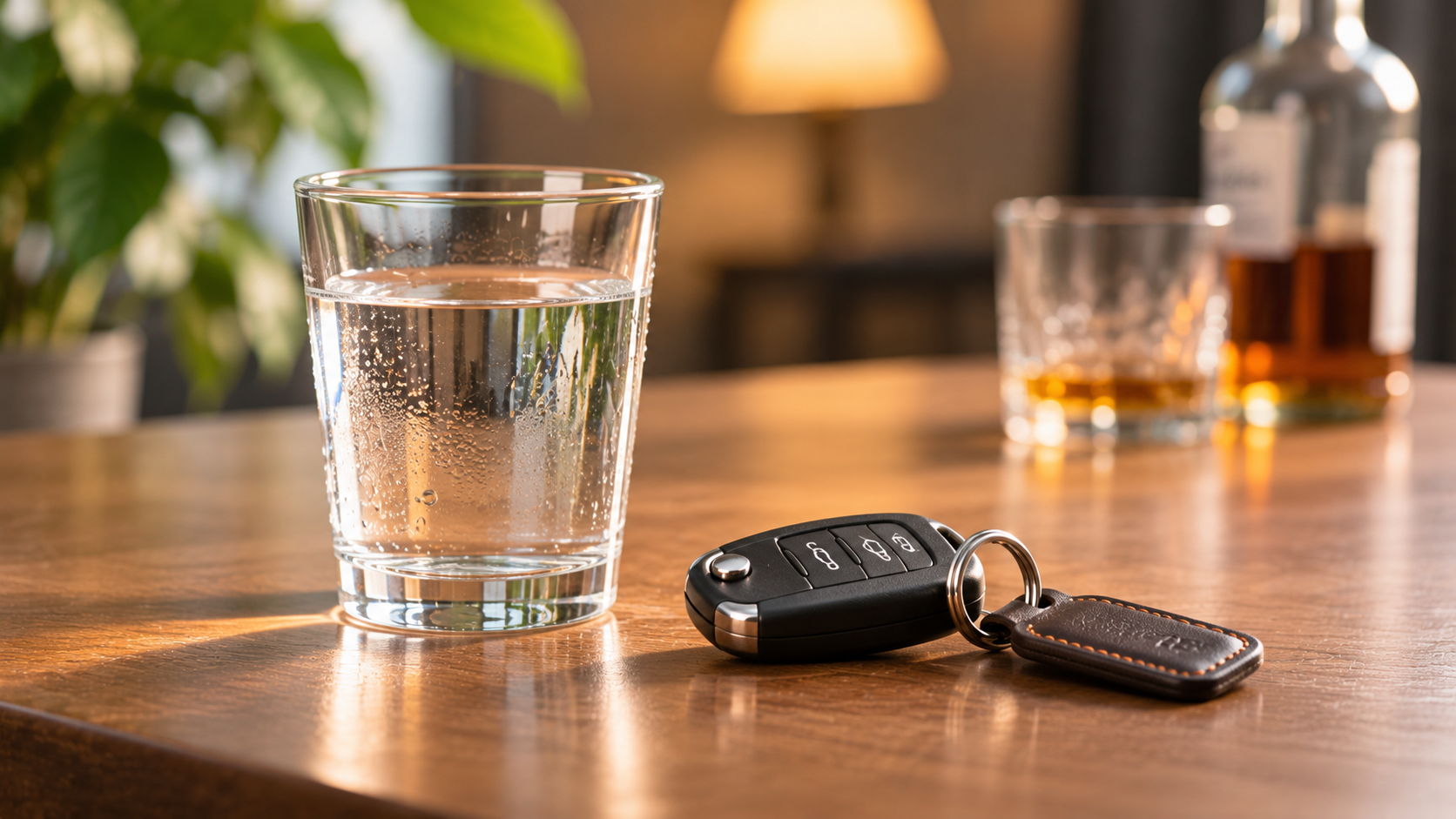
People search for how long alcohol stays in the blood for many reasons: after a night out, before driving, before a medical test or a job, or because they are worried about their own drinking or someone else’s. The honest answer is that alcohol leaves the body slowly and at a rate that differs from person to person, and nothing you do can speed it up.
This guide explains how the body clears alcohol, typical detection times in blood, breath, urine, saliva and hair, the factors that change them, why you shouldn’t use averages to decide whether it is safe to drive, and when drinking may be a sign of a bigger problem. It is general information, not medical or legal advice.
In short
- The body clears alcohol at a fairly steady, slow rate, on average roughly one standard drink per hour. It varies widely between people.
- Nothing speeds it up. Coffee, cold showers, food, sleep and “sweating it out” don’t remove alcohol faster.
- Alcohol can be detected in blood for several hours, in breath, saliva and urine for around a day, in some urine tests for around three days, and in hair for months.
- Never drive after drinking. You can still be impaired and over the legal limit hours later, including the next morning.
- If you drink heavily and regularly, don’t stop suddenly without medical advice, because withdrawal can be dangerous.
How the body processes alcohol
- Absorption. After you drink, alcohol passes quickly into the bloodstream through the stomach and small intestine. Blood alcohol typically peaks within about 30 to 90 minutes, sooner on an empty stomach and with strong or fizzy drinks.
- Distribution. The blood carries alcohol to the brain, liver and other organs. This is why judgement, coordination and reaction time are affected.
- Breakdown. The liver breaks down most alcohol, around nine-tenths, using enzymes. This happens at a limited pace, which is why drinking faster than your liver can process builds up blood alcohol.
- Elimination. A smaller portion leaves unchanged through breath, urine and sweat.
Because the liver works at a roughly constant rate, blood alcohol falls slowly and steadily once you stop drinking.
How long does alcohol stay in your blood?
On average, blood alcohol concentration (BAC) falls by roughly 0.015 percentage points per hour, which many people experience as about one standard drink cleared per hour. The range between people is wide, from about 0.01 to 0.02 per hour or more. So, for a heavy night of drinking, alcohol can still be present in your blood many hours later, and in some cases into the next day.
Please don’t use these averages to work out when it will be “safe” to drive. They are estimates for populations, not predictions for you, and they don’t account for how many standard drinks you actually had, how strong they were, your health, medicines or how impaired you still are. The only safe approach is not to drive at all after drinking.
What affects how long alcohol stays in the blood?
| Factor | Effect |
|---|---|
| Amount and strength | More drinks, and stronger drinks, mean more alcohol to clear and a longer time |
| How fast you drink | Drinking faster than the liver can process raises blood alcohol higher and for longer |
| Food | Eating slows absorption and lowers the peak, but doesn’t speed up clearing |
| Body size and composition | People with less body water, such as smaller people or those with more body fat, tend to reach higher levels from the same amount |
| Sex | Women often reach higher blood alcohol levels from the same amount, partly because of differences in body water and enzyme activity |
| Age | Older adults often clear alcohol more slowly and are more sensitive to its effects |
| Liver health | Liver disease slows breakdown, so alcohol stays longer |
| Medicines | Some medicines interact with alcohol, change how it is processed or add to drowsiness |
| Genetics | Inherited differences in alcohol-processing enzymes affect how quickly alcohol and its by-products are cleared |
| Tolerance | Regular heavy drinkers may feel less drunk, but their blood alcohol is still high, and tolerance doesn’t make clearing faster |
Detection times: blood, breath, urine, saliva and hair
The figures below are typical ranges only. Actual times depend on how much was drunk and the factors above, and different tests have different sensitivity.
| Test | Roughly how long alcohol can be detected |
|---|---|
| Blood | Alcohol itself: up to around 12 hours after drinking, often less after small amounts |
| Breath | Around 12 to 24 hours |
| Saliva | Around 12 to 24 hours |
| Urine (alcohol itself) | Around 12 to 24 hours |
| Urine (alcohol by-products such as EtG) | Up to around 72 to 80 hours, and sometimes longer after heavy drinking |
| Hair | Up to about 90 days for some by-product tests |
Medical and workplace tests may look for alcohol itself or for by-products, and some detect much smaller amounts than others. If you have a medical test or procedure, tell your doctor the truth about your drinking, because it affects safety, results and treatment.
Blood alcohol levels and their effects
Blood alcohol is measured as a percentage, for example 0.08%, meaning 80 mg of alcohol per 100 ml of blood. The effects below are approximate and vary with the person.
| Approximate BAC | What may be happening |
|---|---|
| Low (around 0.02 to 0.05%) | Relaxation, mild loss of inhibition, slightly reduced attention and reaction time. Driving ability is already affected. |
| Moderate (around 0.06 to 0.10%) | Poorer judgement, coordination and reaction time, slurred speech, emotional swings, impaired driving |
| High (around 0.15 to 0.25%) | Marked impairment, clumsiness, confusion, vomiting, blackouts, high risk of injury |
| Very high (around 0.30% and above) | Risk of loss of consciousness, dangerously slowed breathing, alcohol poisoning and death |
Drink-driving: don’t use timing to take a risk
In India, the Motor Vehicles Act sets the legal limit for driving at 30 mg of alcohol per 100 ml of blood (0.03%), with penalties for exceeding it that can include fines, licence action and imprisonment, and higher penalties for repeat offences. Penalties and rules can change, so check current law. Impairment begins well below the legal limit.
- Don’t drive after drinking, and don’t get in a vehicle with a driver who has been drinking.
- Plan your journey before you drink: a sober driver, a taxi or app cab, public transport or staying overnight.
- The next morning counts. After a heavy night, you may still have alcohol in your blood and be impaired, even if you feel fine.
- Medicines, tiredness and other drugs can add to impairment.
Can you speed up sobering up?
| Common belief | What’s true |
|---|---|
| “Coffee will sober me up.” | Coffee may make you feel more awake, but it doesn’t lower blood alcohol or restore judgement. |
| “A cold shower helps.” | No. It may wake you up, but alcohol stays in your blood. |
| “Eating a big meal after drinking clears alcohol.” | Food before or during drinking slows absorption, but afterwards it does not speed up clearing. |
| “Sweating it out, exercise or a sauna works.” | Only a tiny amount leaves through sweat. Exercising or using a sauna while drunk can be dangerous. |
| “Drinking water removes alcohol.” | Water helps prevent dehydration and may ease a hangover, but doesn’t clear alcohol faster. |
| “Sleeping it off means I’m fine to drive.” | Sleep passes time, but alcohol may remain in your blood the next morning. |
| “Detox drinks and supplements flush alcohol out.” | No product speeds up the liver. See how to detox your body from alcohol. |
Only time reduces blood alcohol.
When someone has had too much
Call 112 or go to the nearest hospital if the person:
- Can’t be woken, or is barely conscious
- Has slow, irregular breathing, or blue or pale skin
- Is vomiting repeatedly, or has a seizure
- Is confused, cold or has a very low body temperature
- Has mixed alcohol with sedatives, painkillers or other drugs
Stay with them, keep them on their side so they don’t choke, and don’t give coffee, a cold shower or more alcohol. Don’t leave them to “sleep it off.”
When alcohol clears but the problem doesn’t
For some people, the question isn’t only how long alcohol stays in the blood but why they need to drink so often, or why they feel unwell when levels fall. Signs that drinking may be becoming a problem include:
- Drinking more or more often than planned, or being unable to cut down
- Needing more alcohol for the same effect
- Feeling shaky, anxious, sweaty or unwell when you haven’t had a drink
- Drinking in the morning, or to steady your nerves
- Blackouts, injuries, arguments or trouble at work because of drinking
- Low mood, poor sleep or anxiety that gets worse with drinking
In people who are dependent on alcohol, withdrawal symptoms can begin as blood alcohol falls, even before it reaches zero, and can be dangerous. If you drink heavily every day, don’t stop suddenly without medical advice. See how to detox your body from alcohol, is binge drinking bad and alcohol use disorder vs heavy drinking. Our confidential self-screening is a private first step. It is not a diagnosis.
Practical tips for India
- Count standard drinks. A peg, a bottle of beer and a glass of wine contain different amounts of alcohol, and strong beers and large pours can be several standard drinks.
- Avoid spurious or illicit liquor. It can contain methanol, which can cause blindness or death.
- Plan your ride home. Arrange a sober driver or cab before drinking at weddings, parties and work events, and don’t rely on feeling “fine.”
- Medicines. Many common medicines, including sleeping tablets, sedatives and some painkillers, interact with alcohol. Ask your doctor or pharmacist.
- Be honest with doctors. Before surgery or hospital admission, tell staff about regular drinking so they can prevent withdrawal complications.
- Stigma and “log kya kahenge.” Fear of judgement delays help. Choose confidential services.
- Free support. Tele-MANAS (14416) offers free tele-mental-health support in India.
Special situations
Women. Women often have higher blood alcohol levels from the same amount, and face greater health risks at lower levels of drinking.
Young people. Inexperience can lead to drinking too much too fast, and the developing brain is especially sensitive to alcohol.
Older adults. Alcohol is cleared more slowly and interacts with many medicines. Falls and confusion are more likely. See delirium vs dementia.
People with liver disease. Alcohol stays longer and does more harm. Medical advice is essential.
Pregnancy and breastfeeding. No level of alcohol is considered safe in pregnancy. Speak to your doctor about alcohol and breastfeeding.
Alcohol with mood problems. Drinking can worsen low mood and anxiety. See alcohol and depression.
If you’re worried about someone else’s drinking
Speak calmly when they are sober, describe specific things you’ve noticed, and encourage a medical check. Don’t push someone who drinks heavily to stop suddenly, because withdrawal can be dangerous. Our guides on how to talk to someone about addiction, how alcohol destroys families and how to come out of addiction can help. Look after your own wellbeing too.
How Thamarai can help
If your question comes from worry about your own or a loved one’s drinking, help is available. At Thamarai Healing Center in Pollachi, alcohol addiction treatment is confidential, non-judgemental and personalised, with assessment, supervised detoxification where needed, evidence-based therapies, family involvement and structured aftercare, in a calm setting among the foothills of the Western Ghats. You can also read about The Thamarai Difference.
A confidential conversation is a good place to start. Speak to our team confidentially →
Frequently asked questions
How long does alcohol stay in your blood?
On average, the body clears alcohol at roughly one standard drink per hour, so a heavy night can leave alcohol in the blood for many hours and sometimes into the next day. It varies widely between people, and averages shouldn’t be used to decide whether it is safe to drive.
How long does alcohol stay in your system?
Alcohol can be detected in blood for up to around 12 hours, in breath, saliva and urine for around 12 to 24 hours, in some urine tests for up to around three days, and in hair for up to about 90 days.
Can I drive the morning after drinking?
Not necessarily. After heavy drinking, alcohol may still be in your blood in the morning even if you feel fine. The safest choice is not to drive after drinking, and to plan transport in advance.
How can I get alcohol out of my system faster?
You can’t. Coffee, cold showers, food, water, exercise and detox products don’t speed up the liver. Only time lowers blood alcohol.
What is the legal alcohol limit for driving in India?
The Motor Vehicles Act sets the limit at 30 mg of alcohol per 100 ml of blood (0.03%). Impairment begins below the limit, and penalties and rules can change, so check current law.
Does tolerance mean alcohol leaves my body faster?
No. Regular drinkers may feel less drunk, but their blood alcohol is just as high and clears at a similar rate. Tolerance can hide how impaired you are.
Why do I feel unwell when alcohol leaves my blood?
Hangovers are common after drinking. If you feel shaky, anxious or sweaty when you haven’t had a drink, it may be withdrawal, a sign of dependence. Don’t stop suddenly if you drink heavily every day without medical advice.
Is treatment at Thamarai confidential?
Yes. Enquiries, assessments and treatment are handled confidentially, and you can call to ask questions without committing to anything.
This article is for general information and isn’t a substitute for professional medical or legal advice. Never drive after drinking. If someone may have alcohol poisoning, call 112.
Sources
- National Institute on Alcohol Abuse and Alcoholism (NIAAA). Alcohol Metabolism; Alcohol’s Effects on the Body; What is a standard drink?
- Jones AW. Alcohol, its absorption, distribution, metabolism, and excretion in the body and pharmacokinetic calculations. WIREs Forensic Science, 2019.
- Cederbaum AI. Alcohol metabolism. Clinics in Liver Disease, 2012.
- World Health Organization. Alcohol fact sheet.
- Government of India. Motor Vehicles Act, 1988, Section 185 (as amended in 2019).
- Ministry of Health and Family Welfare, Government of India. Tele-MANAS (14416).