
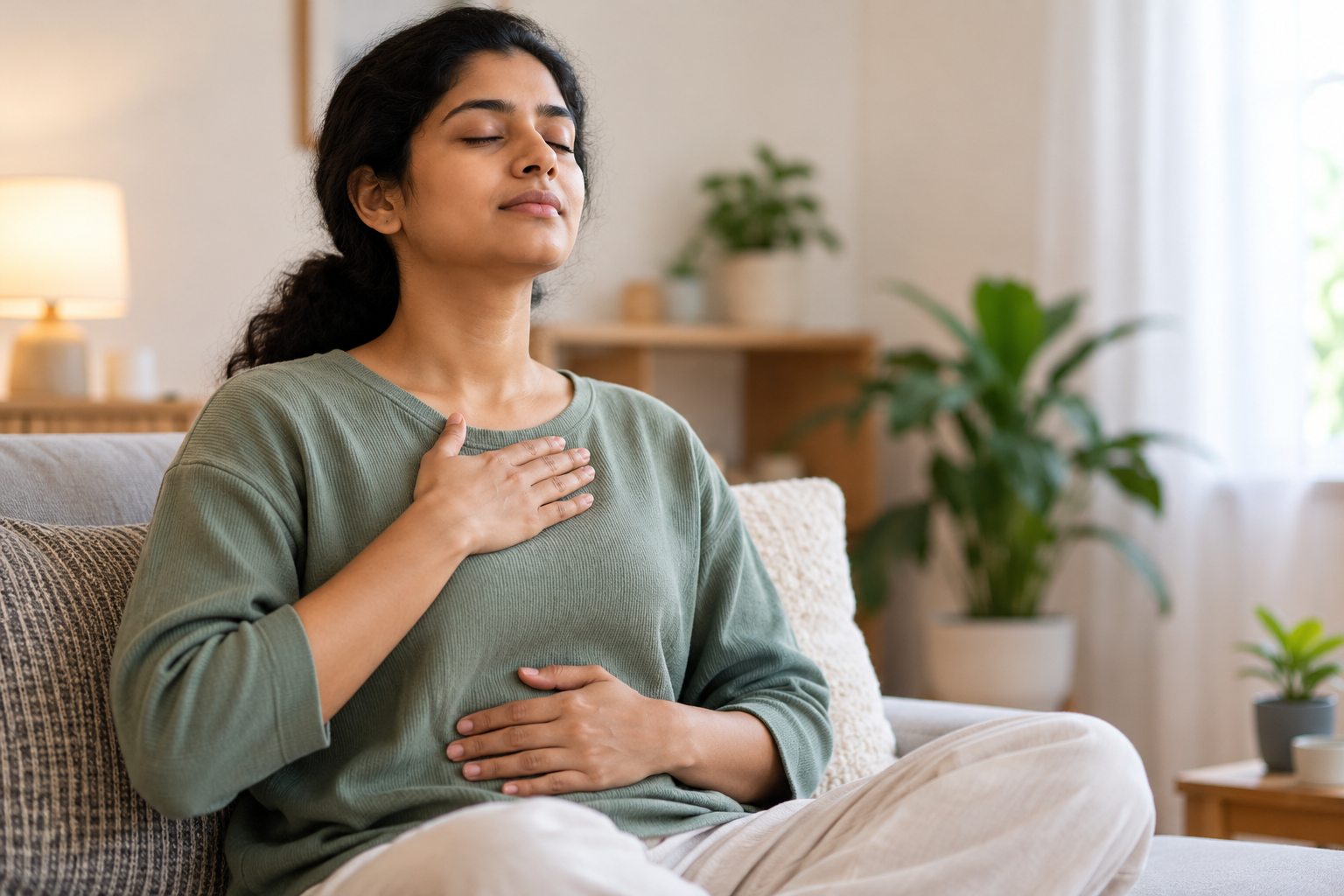
Everyone feels anxious sometimes before an exam, an interview or a difficult conversation. So when anxiety becomes constant, overwhelming or impossible to switch off, a natural question follows: is this just stress, or is it a psychological disorder?
This guide explains the difference between normal anxiety and an anxiety disorder, the main types, how it is diagnosed, and what treatment looks like. It is general information, not medical advice or a diagnosis.
In short
- Anxiety itself is a normal emotion. It becomes an anxiety disorder, which is a psychological (mental health) disorder, when it is excessive, persistent and interferes with daily life.
- Anxiety disorders are among the most common mental health conditions, and they are real, medical and treatable.
- “Psychological disorder” does not mean “imaginary” or “weakness.” It involves biology, thoughts, experiences and environment.
- Therapy, medication, lifestyle changes and support help many people recover or manage symptoms well.
- If anxiety is affecting your life, speaking to a professional is a good next step.
Is anxiety a psychological disorder? The short answer
It depends on what you mean by “anxiety.” Feeling anxious from time to time is part of being human and is not a disorder. But an anxiety disorder is a recognised psychological disorder, listed in both the DSM-5-TR and the WHO’s ICD-11. A psychological disorder, also called a mental disorder or mental health condition, is simply a pattern of thoughts, feelings or behaviour that causes significant distress or interferes with everyday functioning.
The World Health Organization estimates that around 301 million people worldwide were living with an anxiety disorder in 2019, making it one of the most common mental health conditions.
Normal anxiety vs anxiety disorder
| Normal anxiety | Possible anxiety disorder | |
|---|---|---|
| Trigger | A clear stressor, such as an exam, presentation or health scare | Can occur without an obvious trigger, or be far out of proportion to it |
| Intensity | Uncomfortable but manageable | Intense, overwhelming or hard to control |
| Duration | Passes when the stressor ends | Persists for weeks or months, often beyond the stressor |
| Impact | You carry on, perhaps with effort | Work, study, sleep, relationships or daily activities suffer |
| Behaviour | You face the situation | You avoid places, people or tasks to escape the feeling |
What are the main types of anxiety disorder?
| Type | What it involves |
|---|---|
| Generalised anxiety disorder (GAD) | Excessive, hard-to-control worry about many everyday things, on most days, for at least six months, with symptoms such as restlessness, tiredness, poor concentration, irritability, muscle tension or disturbed sleep |
| Panic disorder | Repeated, sudden panic attacks, with ongoing worry about having more or changes in behaviour to avoid them |
| Social anxiety disorder | Intense fear of being judged, embarrassed or humiliated in social or performance situations |
| Specific phobias | Strong, disproportionate fear of a particular object or situation, such as heights, flying, injections or animals |
| Agoraphobia | Fear of situations where escape might be difficult, such as crowds, public transport or open spaces |
| Separation anxiety disorder | Excessive fear of being apart from attachment figures, seen in children and sometimes adults |
Conditions such as obsessive-compulsive disorder (OCD) and post-traumatic stress disorder (PTSD) were once grouped with anxiety disorders. In current DSM classification they have their own categories, though anxiety is a major feature.
What are the symptoms of anxiety?
| Area | What you may notice |
|---|---|
| Thoughts | Constant worry, expecting the worst, difficulty concentrating, mind “going blank” |
| Body | Racing heart, chest tightness, breathlessness, sweating, trembling, dizziness, stomach upset, muscle tension, headaches |
| Emotions | Fear, dread, irritability, feeling on edge or overwhelmed |
| Behaviour | Avoiding situations, seeking constant reassurance, procrastinating, trouble sleeping |
Many of these symptoms can also be caused by physical conditions such as thyroid problems, heart conditions or side effects of medicines, so a medical check-up is sensible.
Is anxiety “just in your head”?
No. Calling anxiety a psychological disorder does not mean it is imaginary or something you can simply stop by thinking positively. Anxiety involves real changes in the brain and body, including the stress response that raises heart rate and tension. It is influenced by a mix of:
- Biology and genetics, including family history and how the brain handles threat
- Psychological factors, such as thinking patterns, perfectionism and learned fears
- Life experiences, including trauma, loss, long-term stress or difficult early years
- Physical health, including hormonal changes, chronic illness or poor sleep
- Substances, because caffeine, alcohol, cannabis and other drugs can trigger or worsen anxiety
“Psychological” describes the type of condition, one involving mind and behaviour, not whether it is real or serious.
How is an anxiety disorder diagnosed?
There is no single blood test or scan. A doctor, psychiatrist or clinical psychologist usually:
- Asks about your symptoms, how long they have lasted and how they affect your life
- Asks about your medical history, medicines, caffeine, alcohol and drug use
- May use screening questionnaires, which help but do not diagnose on their own
- Rules out physical causes where needed
- Compares your symptoms with diagnostic criteria in the DSM-5-TR or ICD-11
If you’d like a private starting point, our confidential self-screening is available. It is not a diagnosis.
How is anxiety treated?
Anxiety disorders respond well to treatment, and many people recover or learn to manage symptoms effectively.
| Approach | What it does |
|---|---|
| Cognitive behavioural therapy (CBT) | Helps you recognise and change anxious thoughts and gradually face feared situations. See our schools of therapy. |
| Exposure-based therapy | Builds confidence by gradually and safely facing feared situations or sensations |
| Medication | Antidepressants such as SSRIs and SNRIs are commonly used for anxiety disorders and prescribed by a doctor. Some sedatives can cause dependence, so they are generally used only briefly and under supervision. |
| Lifestyle changes | Regular movement, sleep routines, balanced meals and less caffeine and alcohol. See exercise for mental health. |
| Relaxation and mindfulness | Breathing, grounding and mindfulness practices can reduce symptoms. See mindfulness for wellbeing. |
| Treating co-occurring conditions | Addresses depression, substance use or other conditions alongside anxiety |
The right combination depends on the person and the type of anxiety, and a professional can advise. Never stop prescribed medicines suddenly without medical advice.
Things that can help day to day
- Slow your breathing. Breathing in gently and out for longer can ease the body’s alarm response.
- Ground yourself. Name things you can see, hear and touch to bring attention to the present.
- Limit caffeine, alcohol and energy drinks, which can worsen anxiety and sleep.
- Keep a regular sleep routine. Poor sleep and anxiety feed each other.
- Don’t avoid everything. Avoidance relieves anxiety in the short run but strengthens it over time. Take small, gradual steps, ideally with professional guidance.
- Talk to someone. Sharing worries with a trusted person reduces their weight.
Practical tips for India
- “Overthinking” and stigma. Anxiety is often dismissed as overthinking or weakness. It is a health condition, and seeking help is sensible.
- Physical complaints. Many people first notice anxiety as palpitations, stomach trouble or headaches. Mention worries and stress to your doctor too.
- Academic and career pressure. Exams, competition and family expectations are common triggers. Early support helps students.
- Free support. Tele-MANAS (14416) offers free tele-mental-health support in India.
- Family involvement. Explaining anxiety as a health condition helps relatives respond with patience instead of “just relax.”
When to get professional help
Please speak to a doctor or mental health professional if:
- Anxiety lasts for weeks and is hard to control
- You are having panic attacks or avoiding places and activities
- It affects your work, studies, sleep or relationships
- You are drinking or using substances to cope
- You feel low, hopeless or have thoughts of self-harm
If you are thinking about ending your life, or you feel unsafe, please reach out now. In India, Tele-MANAS (14416) is a free national helpline, and in an emergency you can call 112 or go to the nearest hospital. Chest pain and breathlessness can also have medical causes, so seek urgent care if you are unsure.
Special situations
Anxiety and depression together. The two often occur together and can feed each other. Read our guide on how to deal with a person with anxiety and depression, and what it means when you feel depressed or hopeless.
Anxiety and addiction. Some people use alcohol, cannabis or sedatives to calm anxiety. This can bring relief at first but often worsens anxiety and leads to dependence. When both are present, treating them together works best. See dual diagnosis.
Panic attacks. They feel frightening but are not dangerous in themselves, and they usually peak within minutes. If you are unsure whether it is a panic attack or a heart problem, get medical help.
Children and teenagers. Anxiety may show up as irritability, stomach aches, school refusal or clinginess. Take it seriously and involve a professional.
When coping starts to harm
Some coping habits relieve anxiety briefly but make it worse in the long run. Be alert if you notice:
- Drinking, smoking or using drugs to calm down
- Avoiding more and more places, people or tasks
- Constantly seeking reassurance from others
- Checking, scrolling or gambling to escape the feeling
- Sleeping very little or relying on sleeping tablets without medical advice
If this sounds familiar, it is a sign to reach out, not a reason for shame.
If you’re worried about someone else
Ask gently, listen without judging, and avoid “just calm down” or “there’s nothing to worry about.” Encourage them to see a professional and offer practical help, such as going along to the appointment. Look after your own wellbeing too.
How Thamarai can help
At Thamarai Healing Center in Pollachi, our mental health program offers confidential, personalised care built around a comprehensive assessment, evidence-based therapies, support for co-occurring conditions and structured aftercare, in a calm setting among the foothills of the Western Ghats. You can also explore our Wellness Center and Activities.
If you are struggling, a confidential conversation is a good place to start. Speak to our team confidentially →
Frequently asked questions
Is anxiety a psychological disorder?
Anxiety itself is a normal emotion. An anxiety disorder, where anxiety is excessive, persistent and disrupts daily life, is a recognised psychological (mental health) disorder that can be diagnosed and treated.
Is anxiety a mental illness?
Anxiety disorders are mental health conditions, sometimes called mental illnesses. “Mental illness” does not mean weakness, and many people with anxiety disorders recover or manage well with treatment.
What is the difference between stress and an anxiety disorder?
Stress is a response to a particular pressure and usually eases when it passes. An anxiety disorder involves excessive worry or fear that persists, may not match the situation, and interferes with daily life.
What are the main types of anxiety disorder?
They include generalised anxiety disorder, panic disorder, social anxiety disorder, specific phobias, agoraphobia and separation anxiety disorder.
Can anxiety be cured?
Many people recover or reduce symptoms significantly with treatment such as CBT, medication and lifestyle changes. Some find anxiety returns during stress, so ongoing coping skills help.
Can anxiety cause physical symptoms?
Yes. Anxiety can cause a racing heart, breathlessness, sweating, dizziness, stomach upset and muscle tension. Because these can have medical causes too, a check-up is advisable.
Does anxiety go away on its own?
Normal anxiety passes when the stressor ends. An anxiety disorder often persists or returns without treatment, so professional support is worthwhile.
Is treatment at Thamarai confidential?
Yes. Enquiries, assessments and treatment are handled confidentially, and you can call to ask questions without committing to anything.
This article is for general information and isn’t a substitute for professional medical advice, diagnosis or treatment.
Sources
- American Psychiatric Association. Diagnostic and Statistical Manual of Mental Disorders, Fifth Edition, Text Revision (DSM-5-TR). 2022. Anxiety Disorders.
- World Health Organization. International Classification of Diseases, 11th Revision (ICD-11), Anxiety or fear-related disorders.
- World Health Organization. Anxiety disorders fact sheet.
- National Institute for Health and Care Excellence (NICE). Generalised anxiety disorder and panic disorder in adults: management (CG113).
- Ministry of Health and Family Welfare, Government of India. Tele-MANAS (14416).