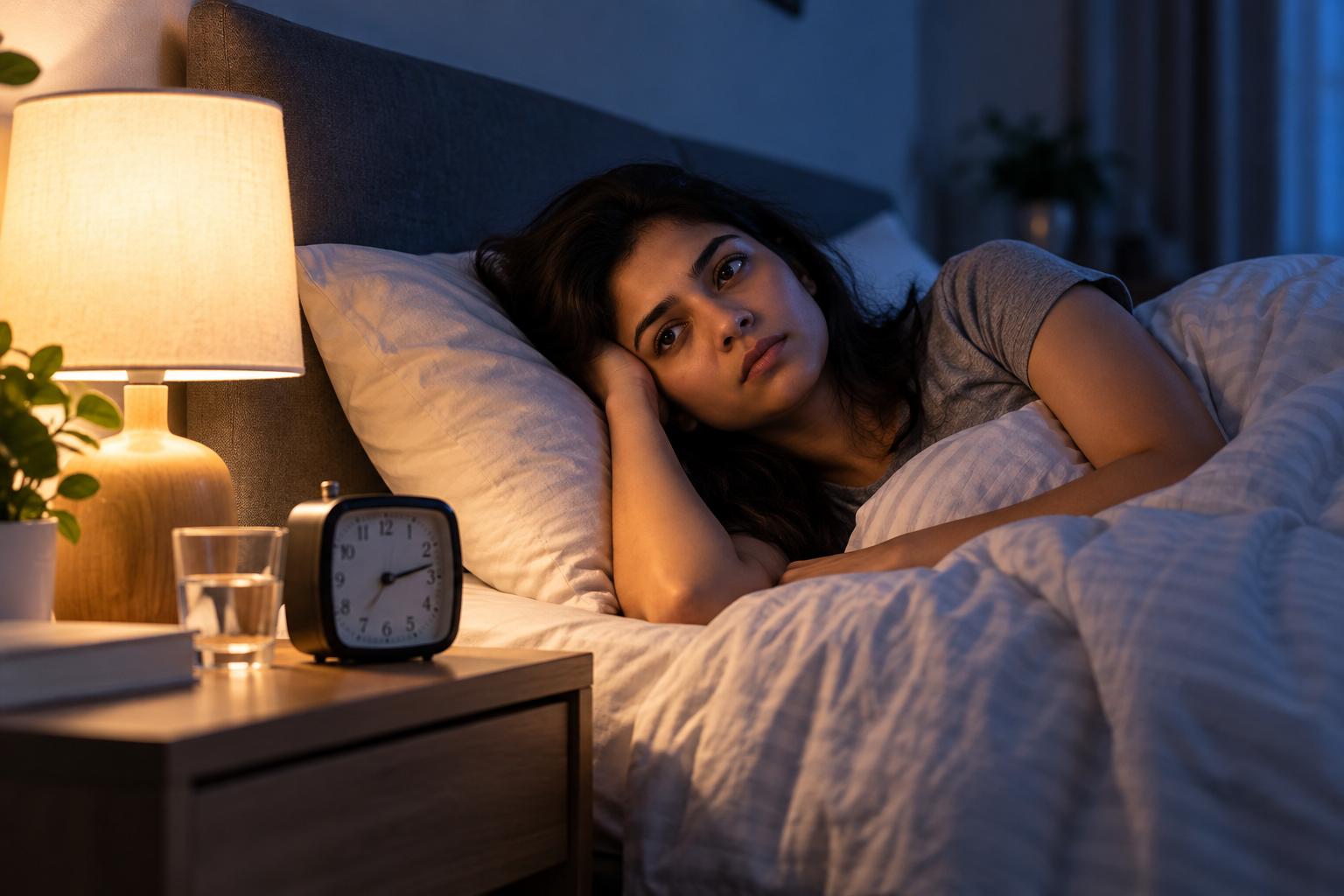
Not all sleep problems are the same. Someone who can’t fall asleep, someone who snores loudly and wakes unrefreshed, someone whose legs feel restless at night and someone who falls asleep at their desk may all say “I have a sleep problem,” but they may have very different conditions that need different treatment.
This guide explains the main types of sleep disorders, their signs, how they are diagnosed, and which doctor to see. It is general information, not medical advice or a diagnosis.
In short
- There are more than 80 recognised sleep disorders, grouped into a few main categories: insomnia, breathing-related, excessive sleepiness, body-clock, abnormal behaviours in sleep, and movement-related disorders.
- The most common are insomnia, obstructive sleep apnoea and restless legs syndrome.
- Signs to take seriously include loud snoring with gasping, uncontrollable daytime sleepiness, acting out dreams, and sleep problems lasting weeks.
- Many sleep disorders are treatable, but the right treatment depends on the right diagnosis.
- Alcohol, sedatives, stress and mental health conditions often make sleep disorders worse.
What is a sleep disorder?
A sleep disorder is a condition that regularly disrupts the quality, timing or amount of your sleep, and affects how you feel and function during the day. Occasional bad nights are normal. A sleep disorder is more persistent, and causes problems such as tiredness, low mood, poor concentration, accidents or health issues.
How are sleep disorders classified?
The American Academy of Sleep Medicine’s International Classification of Sleep Disorders (ICSD-3) groups sleep disorders into seven main categories, and the DSM-5-TR and WHO’s ICD-11 also list sleep-wake disorders.
| Category |
Examples |
Main feature |
| 1. Insomnia |
Chronic insomnia, short-term insomnia |
Trouble falling or staying asleep, or waking too early, with daytime effects |
| 2. Sleep-related breathing disorders |
Obstructive sleep apnoea, central sleep apnoea |
Breathing repeatedly pauses or becomes shallow during sleep |
| 3. Central disorders of hypersomnolence |
Narcolepsy, idiopathic hypersomnia |
Excessive daytime sleepiness despite enough sleep at night |
| 4. Circadian rhythm disorders |
Delayed sleep phase, shift work disorder, jet lag |
Body clock out of step with the sleep you need or want |
| 5. Parasomnias |
Sleepwalking, night terrors, nightmares, REM sleep behaviour disorder |
Unusual behaviours, movements or experiences during sleep |
| 6. Sleep-related movement disorders |
Restless legs syndrome, periodic limb movements, teeth grinding |
Urges to move or movements that disturb sleep |
| 7. Other sleep disorders |
Sleep problems linked to medicines, substances or medical conditions |
Sleep disturbance caused by another cause |
The common types in more detail
Insomnia
Insomnia is difficulty falling asleep, staying asleep or waking too early, with daytime tiredness, low mood or poor concentration. When it occurs at least three nights a week for three months or more, it is considered chronic. It is often linked to stress, anxiety, depression, pain, caffeine, alcohol and irregular routines. The leading treatment is cognitive behavioural therapy for insomnia (CBT-I). Read more in our guide on
who can treat insomnia.
Obstructive sleep apnoea
In obstructive sleep apnoea (OSA), the airway repeatedly narrows or closes during sleep, causing pauses in breathing, often with loud snoring, gasping or choking. People often wake unrefreshed, with morning headaches, dry mouth and heavy daytime sleepiness. It is more common with excess weight, a narrow airway, enlarged tonsils or alcohol and sedative use, but can affect people of any size. Untreated, it is linked with high blood pressure, heart problems and accidents. Diagnosis usually involves a sleep study, and treatment may include lifestyle changes, a CPAP device, dental devices or surgery.
Restless legs syndrome
Restless legs syndrome (RLS) causes an uncomfortable urge to move the legs, usually in the evening or when resting, relieved by movement. It can make it hard to fall asleep. It can be linked with iron deficiency, pregnancy, kidney disease, certain medicines and family history. A doctor can check your iron levels and other causes, and treatment can help.
Narcolepsy and other causes of excessive sleepiness
Narcolepsy is a neurological condition in which the brain has trouble regulating sleep and wake cycles. It causes overwhelming daytime sleepiness, sudden “sleep attacks” and, in some people, brief muscle weakness triggered by emotions (cataplexy), sleep paralysis or vivid dream-like experiences. Other causes of excessive sleepiness include sleep apnoea, insufficient sleep, depression and medicines, so a proper assessment matters.
Circadian rhythm disorders
These occur when your internal body clock is out of step with your schedule. Examples include
delayed sleep phase (being unable to fall asleep until very late, common in teenagers and young adults),
shift work disorder (common in night-shift workers, including BPO, IT and healthcare staff) and
jet lag. Regular timing, light exposure and sometimes treatment from a sleep specialist help.
Parasomnias
Parasomnias are unusual behaviours or experiences during sleep.
- Sleepwalking and sleep terrors are most common in children and usually decrease with age. Keep the sleeping area safe, lock doors and windows, and don’t try to wake the person forcefully.
- Nightmares are frightening dreams that wake you. Frequent nightmares may be linked to stress, trauma or medicines. See how to deal with trauma.
- REM sleep behaviour disorder involves acting out dreams, such as shouting, punching or kicking in sleep. It can cause injuries and should always be assessed by a doctor.
Sleep disorders caused by substances and medicines
Alcohol, caffeine, nicotine, stimulants, cannabis, sedatives and some prescribed medicines can disturb sleep, either while you use them or when you stop. Alcohol may make you drowsy at first, but it fragments sleep, worsens snoring and sleep apnoea and can cause early waking. Withdrawal from alcohol, sedatives or other drugs often causes insomnia, vivid dreams and nightmares, and some withdrawals can be dangerous. If you rely on alcohol or tablets to sleep, see
how to detox your body from alcohol and
how to come out of addiction.
Sleep problems linked to mental health
Poor sleep and mental health affect each other. Insomnia is a symptom of depression, anxiety, PTSD and bipolar disorder, and can also raise the risk of developing them. Treating both together works best. See
is depression a mental disorder and
is anxiety a psychological disorder.
Which doctor should you see?
| If you notice |
Who may help |
| Trouble falling or staying asleep |
Family doctor, psychiatrist, or a psychologist trained in CBT-I |
| Loud snoring, gasping, pauses in breathing, morning headaches |
Sleep specialist, pulmonologist or ENT specialist |
| Restless legs or leg twitching |
Family doctor, neurologist or sleep specialist |
| Overwhelming daytime sleepiness, sudden sleep attacks |
Sleep specialist or neurologist |
| Night shifts or a body clock that won’t shift |
Sleep specialist or family doctor |
| Sleepwalking, night terrors, acting out dreams |
Sleep specialist, neurologist or paediatrician for children |
| Poor sleep with low mood, worry, trauma or substance use |
Psychiatrist or psychologist, or an addiction specialist |
| Not sure where to start |
Your family doctor |
How are sleep disorders diagnosed?
- A detailed history: your sleep pattern, symptoms, health, medicines, caffeine, alcohol and mental health. A partner’s description of snoring or movements helps.
- A sleep diary, usually for one to two weeks.
- Questionnaires, such as the Epworth Sleepiness Scale for daytime sleepiness.
- A physical examination and blood tests, for example to check thyroid, anaemia or iron levels.
- Sleep tests where needed, such as an overnight sleep study (polysomnography), a home sleep apnoea test or actigraphy (a wrist device that tracks sleep and activity).
How are sleep disorders treated?
| Type |
Common treatments |
| Insomnia |
CBT-I, sleep habit changes, treating underlying causes, short-term medication in some cases |
| Sleep apnoea |
Weight and lifestyle changes, avoiding alcohol and sedatives, CPAP, dental devices or surgery |
| Restless legs |
Treating iron deficiency or other causes, lifestyle changes and, where needed, medicines |
| Narcolepsy |
Scheduled naps, lifestyle measures and specialist medicines |
| Circadian disorders |
Consistent timing, light exposure, schedule changes and sometimes timed treatment |
| Parasomnias |
Safety measures, treating triggers such as stress or poor sleep, and specialist treatment when needed |
Sleep medicines should only be used as prescribed by a doctor. Sleeping tablets can cause drowsiness, dependence and memory problems, and are dangerous with alcohol.
Practical tips for India
- Snoring isn’t always “deep sleep.” Loud snoring with gasping or daytime sleepiness may be sleep apnoea, which is often missed.
- Specialist access. Sleep clinics are concentrated in larger cities. Your family doctor can refer you, and online consultations may help.
- Night shifts. BPO, IT and healthcare shifts are a common cause of body-clock problems. Keep consistent routines and use blackout curtains.
- Chemist sedatives and alcohol. Easy to buy, but they can worsen sleep and cause dependence.
- Yoga, pranayama and meditation. They help many people relax and can be used alongside medical care.
- Stigma. Sleep problems are often brushed off as “stress” or “laziness.” Persistent problems deserve a proper check.
- Free support. Tele-MANAS (14416) offers free tele-mental-health support in India.
When to get help
Please see a doctor if:
- Sleep problems last three weeks or more, or affect daily life
- You snore loudly, gasp, or stop breathing during sleep
- You fall asleep unintentionally during the day, or feel drowsy while driving
- You have acted out dreams, or hurt yourself or others in sleep
- You use alcohol, sedatives or other substances to sleep
- You feel low, anxious or hopeless
Don’t drive when drowsy. If you are thinking about ending your life, please reach out now. In India,
Tele-MANAS (14416) is a free national helpline, and in an emergency you can call
112 or go to the nearest hospital.
Special situations
Children. Snoring, bedwetting, nightmares and night terrors are common. Persistent snoring or pauses in breathing should be checked, because enlarged tonsils can be a cause.
Older adults. Sleep changes with age, but persistent problems are not normal. Pain, medicines and conditions such as sleep apnoea can contribute.
Pregnancy. Restless legs, snoring and insomnia are common. Speak to a doctor before using any sleep aid.
Mental health and addiction. Sleep disorders often occur alongside these conditions. See
dual diagnosis.
When coping starts to harm
- Drinking or taking chemist sedatives to fall asleep
- Relying on large amounts of caffeine to get through the day
- Ignoring severe daytime sleepiness, or driving while drowsy
- Spending the night on screens and sleeping through the day
- Putting up with loud snoring and breathing pauses for years
If this sounds familiar, it is a sign to get checked, not a reason for shame. For everyday habits that protect sleep and mood, see
how to stay mentally healthy.
If you’re worried about someone else
Describe what you’ve noticed, such as loud snoring, pauses in breathing, leg movements or acting out dreams, because this helps a doctor. Encourage them to get checked, avoid blaming, and make the bedroom safe if they sleepwalk or act out dreams.
How Thamarai can help
Sleep problems are often part of a bigger picture, such as anxiety, depression, trauma or alcohol and drug use. At Thamarai Healing Center in Pollachi, our
mental health program offers confidential, personalised care built around a comprehensive assessment, evidence-based therapies, support for co-occurring conditions, family involvement and structured aftercare, in a calm setting among the foothills of the Western Ghats. You can also explore our
Wellness Center.
If sleep problems are tied up with your mood or substance use, a confidential conversation is a good place to start.
Speak to our team confidentially →
Frequently asked questions
What are the types of sleep disorders?
The main groups are insomnia, sleep-related breathing disorders such as sleep apnoea, disorders of excessive sleepiness such as narcolepsy, circadian rhythm disorders, parasomnias such as sleepwalking, and movement disorders such as restless legs syndrome.
What is the most common sleep disorder?
Insomnia is the most common, followed by obstructive sleep apnoea and restless legs syndrome.
What are the signs of a sleep disorder?
Trouble falling or staying asleep, loud snoring or gasping, restless legs, overwhelming daytime sleepiness, acting out dreams, and persistent tiredness, low mood or poor concentration.
Which doctor treats sleep disorders?
Start with your family doctor. Depending on the problem, you may be referred to a sleep specialist, psychiatrist, psychologist, pulmonologist, ENT doctor or neurologist.
How are sleep disorders diagnosed?
Through a history, sleep diary, questionnaires, an examination and, where needed, tests such as an overnight sleep study, home sleep apnoea test or actigraphy.
Can sleep disorders be cured?
Many can be effectively treated or managed, such as insomnia with CBT-I or sleep apnoea with CPAP. The right treatment depends on the correct diagnosis.
Can alcohol cause sleep disorders?
Alcohol disturbs sleep, worsens snoring and sleep apnoea and can cause insomnia, especially during withdrawal. Using it to sleep tends to make sleep worse over time.
Is treatment at Thamarai confidential?
Yes. Enquiries, assessments and treatment are handled confidentially, and you can call to ask questions without committing to anything.
This article is for general information and isn’t a substitute for professional medical advice, diagnosis or treatment.
Sources
- American Academy of Sleep Medicine. International Classification of Sleep Disorders, 3rd ed. (ICSD-3). 2014.
- American Psychiatric Association. Diagnostic and Statistical Manual of Mental Disorders, Fifth Edition, Text Revision (DSM-5-TR). 2022. Sleep-Wake Disorders.
- World Health Organization. International Classification of Diseases, 11th Revision (ICD-11), Sleep-wake disorders.
- Johns MW. A new method for measuring daytime sleepiness: the Epworth Sleepiness Scale. Sleep, 1991.
- Kapur VK, et al. Clinical practice guideline for diagnostic testing for adult obstructive sleep apnea. Journal of Clinical Sleep Medicine, 2017.
- Allen RP, et al. Restless legs syndrome/Willis-Ekbom disease diagnostic criteria. Sleep Medicine, 2014.
- Ministry of Health and Family Welfare, Government of India. Tele-MANAS (14416).