
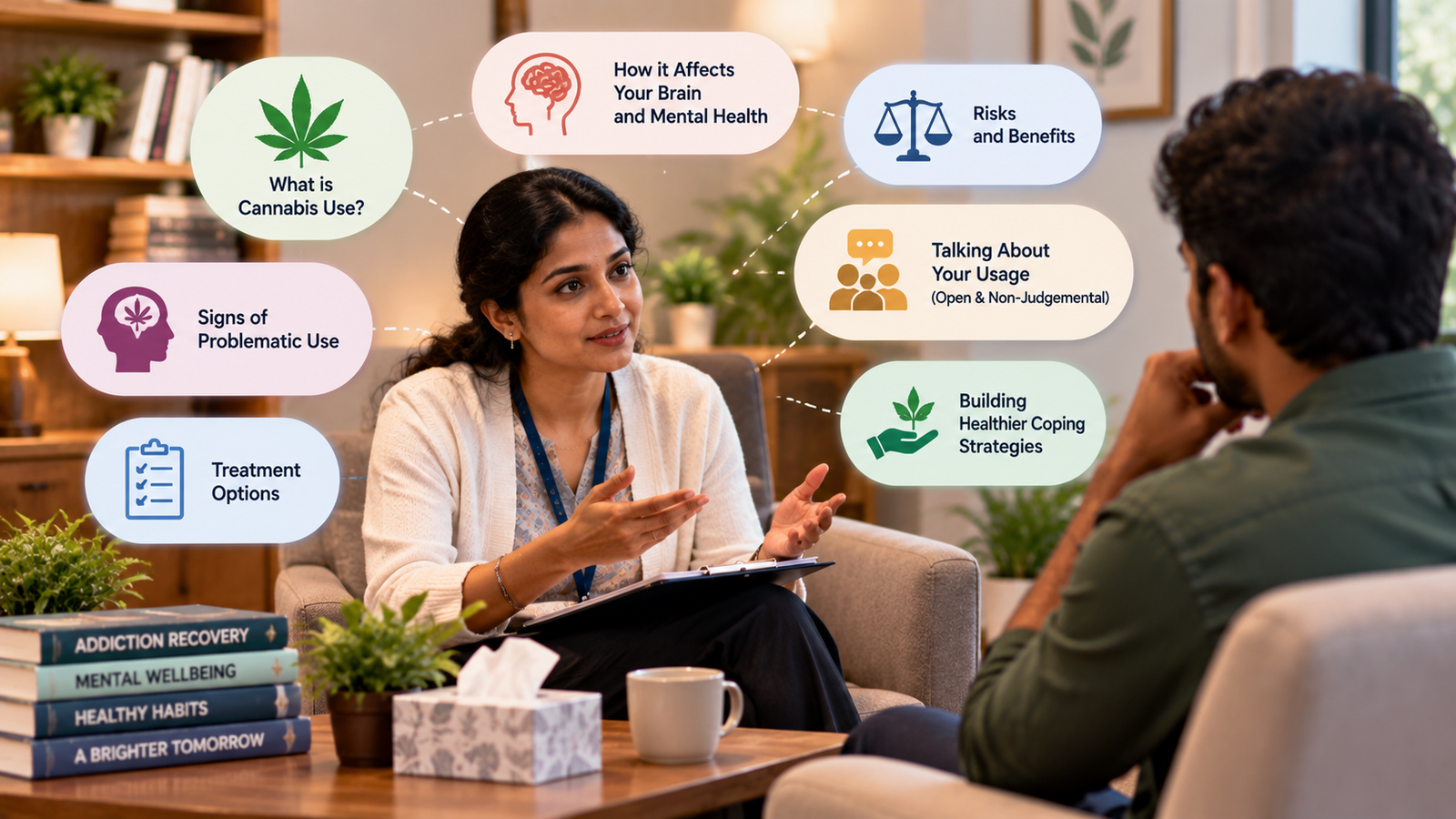
Cannabis is often talked about as though it sits in a different category from other substances, sometimes seen as harmless, sometimes as a stepping stone to something worse. Neither framing is especially accurate. What the clinical evidence actually shows is more specific: for some people, regular cannabis use develops into a diagnosable condition called cannabis use disorder.
This guide explains what cannabis use disorder is, who is more likely to develop it, what withdrawal can look like, and what treatment involves. It is general information, not medical or legal advice. Laws and regulations around cannabis vary by location and can change, so this article does not comment on legal status.
In short
- Cannabis can be addictive for some people. Clinicians call this cannabis use disorder, a diagnosable condition, not a moral judgement.
- Regular, heavy use raises the risk, but not everyone who uses cannabis regularly develops the disorder.
- Cannabis withdrawal is real and can include irritability, anxiety, sleep problems, and reduced appetite.
- Starting use in adolescence and using more potent products are both linked with higher risk.
- Effective treatments exist, primarily behavioural therapies, since no medicine is currently approved specifically for cannabis use disorder.
Is cannabis addictive?
Yes, for some people. The National Institute on Drug Abuse (NIDA) and the World Health Organization (WHO) both recognise cannabis use disorder as a diagnosable condition, included in major diagnostic systems such as the DSM-5-TR and ICD-11.
That said, addiction isn’t inevitable with cannabis use, and research suggests most people who try cannabis, or even use it occasionally, do not develop the disorder. The risk depends on a combination of factors: how often and how much someone uses, the potency of the product, the age they started, and individual factors including genetics and mental health.
This is a useful, and often overlooked, distinction: using cannabis, even regularly, is not the same as having cannabis use disorder. The disorder is defined by a specific pattern, described below, not by frequency of use alone.
What is cannabis use disorder?
Like other substance use disorders, cannabis use disorder is diagnosed based on a cluster of symptoms occurring together, drawn from frameworks such as the DSM-5-TR. In general terms, these include:
- Using more cannabis, or for longer, than intended
- Wanting to cut down or stop, and being unable to
- Spending a lot of time obtaining, using, or recovering from cannabis
- Strong cravings for cannabis
- Cannabis use interfering with responsibilities at work, school, or home
- Continuing to use despite relationship problems it’s causing
- Giving up activities that used to matter in favour of using
- Using in situations that are physically risky, such as before driving
- Continuing to use despite knowing it’s worsening a physical or mental health problem
- Tolerance, needing more to get the same effect
- Withdrawal symptoms when stopping or cutting down
A clinician looks at how many of these apply and how they combine, not any single symptom in isolation. (Our guide on addiction, dependence, and tolerance explains these underlying concepts in more depth.)
Who is more likely to develop cannabis use disorder?
Research points to several factors associated with higher risk, though none of them guarantee the disorder will develop:
- Starting cannabis use in adolescence. Younger age of first use is consistently associated with higher risk of developing problematic use later.
- Frequent, heavy use. Daily or near-daily use carries more risk than occasional use.
- Higher-potency products. Cannabis products with higher concentrations of THC, the main psychoactive compound, are associated with greater risk of dependence and other harms.
- A family history of substance use disorders.
- Co-occurring mental health conditions, such as anxiety or depression, where cannabis may initially seem to help but can complicate both conditions over time.
- Using cannabis alongside other substances.
None of these factors, individually or combined, mean addiction is certain. They describe raised risk, not destiny.
Cannabis withdrawal: it’s a real, recognised phenomenon
One of the more persistent myths about cannabis is that it doesn’t cause withdrawal. This isn’t accurate. Cannabis withdrawal syndrome is recognised in the DSM-5-TR and can include:
- Irritability, anger, or aggression
- Anxiety or nervousness
- Sleep difficulties, including vivid or disturbing dreams
- Decreased appetite or weight loss
- Restlessness
- Low mood
- Physical symptoms such as stomach discomfort, headache, sweating, or chills, in some people
Symptoms typically begin within the first day or two after stopping regular use, tend to peak within the first week, and generally improve over one to two weeks, though sleep difficulties in particular can linger longer for some people. Cannabis withdrawal is not usually medically dangerous in the way alcohol or some sedative withdrawal can be, but it can be genuinely uncomfortable, and its intensity is one of the practical barriers people face when trying to cut down or stop.
Cannabis and mental health
The relationship between cannabis and mental health is an active area of research, and it isn’t simple. Some points worth understanding:
- Cannabis use, particularly heavy or early use, has been associated in research with a higher likelihood of anxiety, depression, and psychotic symptoms in some people, though the exact nature of this relationship, including questions of cause and effect versus shared risk factors, continues to be studied.
- People sometimes use cannabis to try to manage anxiety, sleep problems, or low mood, which can create a pattern where cannabis feels helpful in the short term but complicates the underlying condition, or the ability to treat it, over time.
- Anyone with an existing mental health condition who is also using cannabis regularly should be assessed with both in mind together, not separately. Our guide on dual diagnosis explains why this integrated approach matters.
Treatment for cannabis use disorder
There is currently no medicine specifically approved for treating cannabis use disorder, unlike some other substance use disorders. Treatment therefore centres on behavioural approaches, which research has shown to be effective for many people:
Motivational Enhancement Therapy (MET). This approach helps people who feel uncertain or ambivalent about changing their cannabis use explore their own reasons for change and build motivation at their own pace, rather than being told what to do. Our Motivational Enhancement Therapy page explains how this works.
Cognitive Behavioural Therapy (CBT). CBT helps people identify the thoughts, situations, and triggers that lead to cannabis use, and build practical strategies to manage cravings and change the pattern.
Contingency Management. This approach provides structured, tangible rewards for meeting recovery goals, such as verified abstinence, which research has shown to be effective in supporting behaviour change for cannabis and other substance use. Our Contingency Management page has more detail.
Many treatment programmes combine these approaches, often alongside support for any co-occurring mental health condition, since treating both together tends to produce better outcomes than treating either alone.
A note on tone
This article aims to describe cannabis use disorder factually and without judgement. Whether someone is worried about their own use, a family member’s, or is simply trying to understand the evidence, the goal here is accurate information, not a verdict on cannabis use in general. This article also does not offer legal advice; the legal status of cannabis varies by location and is a separate question from whether a particular pattern of use meets clinical criteria for a disorder.
When to consider seeking help
Consider talking to a professional if:
- You’ve tried to cut down or stop and found it harder than expected
- Cannabis use is affecting your work, studies, relationships, or motivation
- You’re using cannabis to manage anxiety, low mood, or sleep problems, and it doesn’t feel sustainable
- You notice withdrawal symptoms, such as irritability or disturbed sleep, when you go without it
- A family member or friend has raised concerns
There’s no need to wait until things feel severe. An assessment can clarify what’s happening and what, if anything, would help.
How Thamarai can help
At Thamarai Healing Center in Pollachi, treatment for cannabis use disorder starts with a full assessment of the pattern of use and any co-occurring mental health needs, so care is built around the individual rather than a generic programme. Approaches such as Motivational Enhancement Therapy and Contingency Management are used within a supportive, non-judgemental setting, alongside broader drug addiction treatment where needed.
If you’re unsure whether your cannabis use, or someone else’s, has become a concern, a confidential conversation is a good place to start. Speak to our team →
Frequently asked questions
Can you get addicted to cannabis?
Yes, for some people. Cannabis use disorder is a recognised diagnosable condition, though not everyone who uses cannabis, even regularly, develops it.
Is cannabis withdrawal dangerous?
It’s not usually medically dangerous in the way some other substance withdrawal can be, but it can involve genuinely uncomfortable symptoms such as irritability, anxiety, and disturbed sleep, which can make stopping harder than people expect.
How do I know if my cannabis use is a problem?
A useful question is whether use has become difficult to control, and whether it’s interfering with responsibilities, relationships, or wellbeing despite wanting to cut down. A professional assessment can give clarity beyond a self-check.
Is there medicine to treat cannabis use disorder?
Not currently one specifically approved for this purpose. Treatment focuses on behavioural therapies such as motivational enhancement therapy, CBT, and contingency management.
Does cannabis cause mental health problems?
Research shows an association between cannabis use, particularly heavy or early use, and a higher likelihood of certain mental health difficulties in some people, though the full nature of this relationship is still being studied. Anyone concerned about this should seek an individual assessment.
Is using cannabis every day automatically addiction?
Not automatically, though frequent, heavy use does raise the risk of developing cannabis use disorder. The diagnosis depends on a specific pattern of symptoms, not frequency alone.
This article is for general information and isn’t a substitute for professional medical advice, diagnosis or treatment. It does not provide legal advice.
Sources
- National Institute on Drug Abuse (NIDA). Cannabis (Marijuana) DrugFacts and Is marijuana addictive?
- World Health Organization. International Classification of Diseases, 11th Revision (ICD-11): disorders due to use of cannabis.
- American Psychiatric Association. Diagnostic and Statistical Manual of Mental Disorders, Fifth Edition, Text Revision (DSM-5-TR). 2022.
- Budney AJ et al. Review of the validity and significance of cannabis withdrawal syndrome. American Journal of Psychiatry.
- Volkow ND et al. Adverse Health Effects of Marijuana Use. New England Journal of Medicine.