
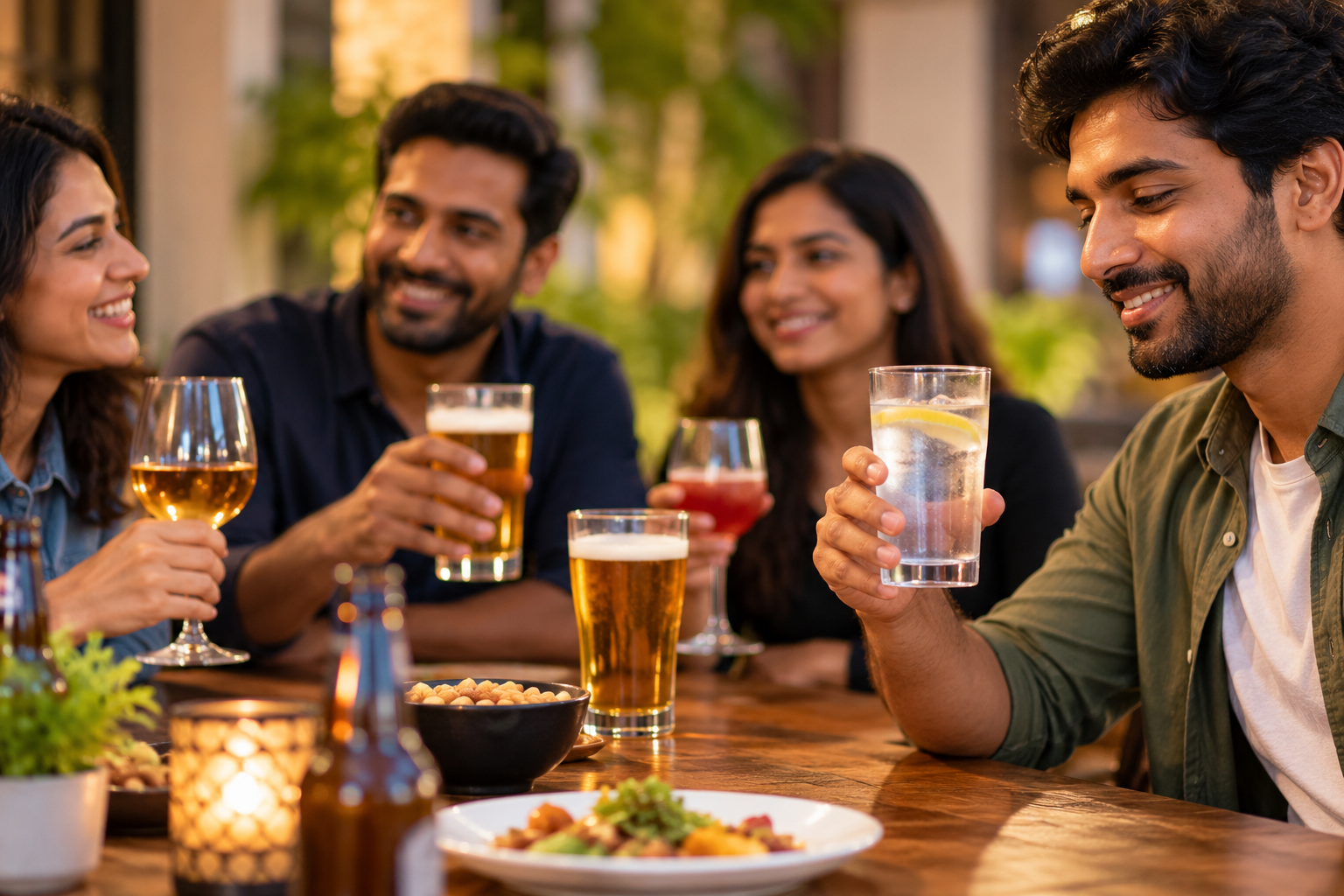
“It’s just a weekend.” “Everyone does it at weddings.” “I only drink like this once in a while.” Binge drinking is so common in parties, college life and celebrations that many people never stop to ask whether it is harmful. It is, even when it doesn’t feel like a “drinking problem.”
This guide explains what binge drinking is, why it is bad, whether doing it once a month matters, and how to prevent it. It is general information, not medical advice.
In short
- Yes, binge drinking is bad. Drinking a large amount in a short time raises the risk of injury, alcohol poisoning, blackouts, violence and long-term health problems.
- It is usually defined as drinking enough to reach a blood alcohol level of 0.08%, roughly 5 or more drinks for men or 4 or more for women within about two hours.
- Once a month still carries risk. The danger of each episode depends on how much you drink and the situation, and no amount of alcohol is considered completely safe.
- Most people who binge drink are not alcohol dependent, but regular bingeing can lead to dependence.
- Prevention is practical: set limits, pace yourself, eat first, avoid shots and rounds, and plan your way home.
What is binge drinking?
Binge drinking means drinking a lot of alcohol in a short period, so that blood alcohol concentration rises quickly. The most common definitions are:
| Source | Definition |
|---|---|
| US National Institute on Alcohol Abuse and Alcoholism (NIAAA) | A pattern of drinking that brings blood alcohol concentration to 0.08% or higher. This typically takes about 5 drinks for men or 4 for women in around 2 hours. |
| World Health Organization (heavy episodic drinking) | Drinking at least 60 grams of pure alcohol, roughly six standard drinks, on one occasion |
“One drink” is smaller than many people think. A standard drink contains roughly 10 to 14 grams of pure alcohol, depending on the country. In India, a 30 ml peg of whisky or rum is about one standard drink, but a large bottle of strong beer can be several. Counting standard drinks, not glasses or bottles, gives a more honest picture.
Binge drinking is not the same as alcohol addiction, and you don’t need to drink every day to be at risk. See our guide to alcohol use disorder vs heavy drinking.
Is binge drinking bad?
Yes. Drinking this much in a short time overwhelms the body’s ability to process alcohol, which affects judgement, coordination, breathing and heart rhythm. The harm comes from the amount consumed in one sitting, not only from how often you drink.
Why is binge drinking bad?
| Type | Risks |
|---|---|
| Right away | Alcohol poisoning, vomiting, blackouts (memory gaps), falls and injuries, road accidents, fights and violence, unsafe sex, being vulnerable to theft or assault |
| Body | Irregular heartbeat, high blood pressure spikes, stomach and pancreas inflammation, liver damage with repeated heavy drinking |
| Mind | Poor sleep, anxiety and low mood the next day or two, worse mental health over time |
| Long term | Higher risk of liver disease, high blood pressure, stroke, several cancers and alcohol use disorder when bingeing becomes a pattern |
| Life and family | Money problems, missed work or study, arguments and strain on relationships. See how alcohol destroys families |
Young people face extra risks because the developing brain is more sensitive to alcohol, and because inexperience makes it easy to drink too much too quickly.
Is binge drinking once a month bad?
Less frequent bingeing is generally less harmful than weekly bingeing, but “once a month” is not automatically safe.
- The acute risks happen every time. An accident, alcohol poisoning or an assault doesn’t depend on how rarely you drink. One heavy night can be enough.
- Amount matters. Five drinks and fifteen drinks are very different, even if both are “once a month.”
- It can escalate. Occasional bingeing sometimes becomes more frequent over time, especially under stress.
- Some people should not binge at all, including people with liver or heart conditions, anyone taking medicines that interact with alcohol, people with anxiety, depression or a history of addiction, and anyone pregnant.
- No amount is risk-free. The World Health Organization has stated that no level of alcohol consumption is safe for health.
If you drink to the point of memory loss, vomiting or needing help getting home, treat it as a sign to change your pattern, even if it only happens monthly.
Signs binge drinking is becoming a problem
- You regularly drink more than you planned
- You black out, or can’t remember parts of the night
- You’ve been injured, in trouble or in arguments because of drinking
- You drink to cope with stress, loneliness or low mood
- You’ve tried to cut down and couldn’t
- You think about drinking between occasions, or feel shaky or anxious when you don’t drink
If several apply, a confidential check is worthwhile. Our self-screening is a private first step. It is not a diagnosis.
How to prevent binge drinking
- Decide your limit before you start, and count standard drinks, not glasses.
- Eat before and while you drink. An empty stomach speeds up absorption.
- Pace yourself. Sip slowly, and alternate each drink with water or a non-alcoholic drink.
- Avoid shots, rounds and drinking games, which push you to drink faster than planned.
- Choose lower-strength drinks, and watch out for large pours.
- Know your triggers, such as stress, peer pressure, parties, payday or boredom, and plan for them.
- Plan how you’ll get home safely, and never drive after drinking.
- Don’t mix alcohol with energy drinks, sedatives or other drugs.
- Have alcohol-free days, and find other ways to relax and socialise.
- Tell a friend, and ask them to help you stick to your limit.
- Get help early if you keep exceeding your limits.
Practical tips for India
- Peer and social pressure. Weddings, festivals, office parties and college events often make saying no hard. Having a polite line ready, such as “I’m good with this one,” or holding a non-alcoholic drink, helps.
- Strong beers and large pours. Check the strength and size of what you are served.
- Beware spurious liquor. Illicit or spurious liquor can contain methanol, which can cause blindness or death. Avoid unlicensed alcohol.
- Women and alcohol. Women generally reach higher blood alcohol levels from the same amount, which is why lower limits are used.
- Stigma. Many people hesitate to seek help for “just weekend drinking.” Confidential support is available.
- Free support. Tele-MANAS (14416) offers free tele-mental-health support in India.
What if someone has had too much?
Call 112 or go to the nearest hospital if the person:
- Can’t be woken, or is barely conscious
- Has slow, irregular breathing, or blue or pale skin
- Is vomiting repeatedly, or has a seizure
- Is confused, cold or has a very low body temperature
Stay with them, keep them on their side so they don’t choke, and don’t give coffee, a cold shower or more alcohol. These do not sober anyone up. Don’t leave them to “sleep it off.”
When to get professional help
Please speak to a doctor or counsellor if you can’t stick to your limits, binge often, black out, or notice drinking affecting your health, work or relationships. If you drink heavily every day, don’t stop suddenly without medical advice, because withdrawal can be dangerous. See how to detox your body from alcohol. If you feel hopeless or have thoughts of self-harm, call Tele-MANAS (14416) or 112.
If you are worried about someone else, speak calmly when they are sober, describe specific things you’ve noticed, and encourage a medical assessment. For more, see how to come out of addiction.
How Thamarai can help
At Thamarai Healing Center in Pollachi, alcohol addiction treatment is confidential, non-judgemental and personalised, with assessment, supervised detoxification where needed, evidence-based therapies and aftercare. You can also read about The Thamarai Difference.
If you are worried about your drinking, a confidential conversation is a good place to start. Speak to our team confidentially →
Frequently asked questions
Is binge drinking bad?
Yes. Drinking a large amount in a short time raises the risk of alcohol poisoning, blackouts, accidents, violence and long-term health problems, and can lead to alcohol dependence if it becomes a pattern.
What is binge drinking?
It is drinking enough to raise blood alcohol to 0.08% or higher, typically about 5 or more drinks for men or 4 or more for women within around two hours. The WHO describes heavy episodic drinking as at least 60 grams of pure alcohol on one occasion.
Why is binge drinking bad?
It overwhelms the body’s ability to process alcohol, affecting judgement, coordination, breathing and heart rhythm. It can cause poisoning, injuries and blackouts, and repeated bingeing raises the risk of liver disease, high blood pressure, cancers and addiction.
Is binge drinking once a month bad?
It is less risky than frequent bingeing, but each episode still carries immediate risks such as accidents and alcohol poisoning, and no level of alcohol is considered completely safe. It can also escalate over time.
How can I prevent binge drinking?
Set a limit before you start, count standard drinks, eat first, pace yourself with water, avoid shots and rounds, plan a safe way home and have alcohol-free days. Seek help if you keep going over your limit.
Is binge drinking the same as alcoholism?
No. Most people who binge drink are not dependent on alcohol, but regular bingeing can lead to alcohol use disorder over time.
Is treatment at Thamarai confidential?
Yes. Enquiries, assessments and treatment are handled confidentially, and you can call to ask questions without committing to anything.
This article is for general information and isn’t a substitute for professional medical advice, diagnosis or treatment. If someone may have alcohol poisoning, call 112.
Sources
- National Institute on Alcohol Abuse and Alcoholism (NIAAA). Binge drinking and What is a standard drink?
- World Health Organization. Alcohol fact sheet; No level of alcohol consumption is safe for our health (statement, January 2023).
- US Centers for Disease Control and Prevention. Alcohol and Public Health: Binge Drinking.
- American Psychiatric Association. Diagnostic and Statistical Manual of Mental Disorders, Fifth Edition, Text Revision (DSM-5-TR). 2022. Alcohol use disorder.
- Ministry of Health and Family Welfare, Government of India. Tele-MANAS (14416).