
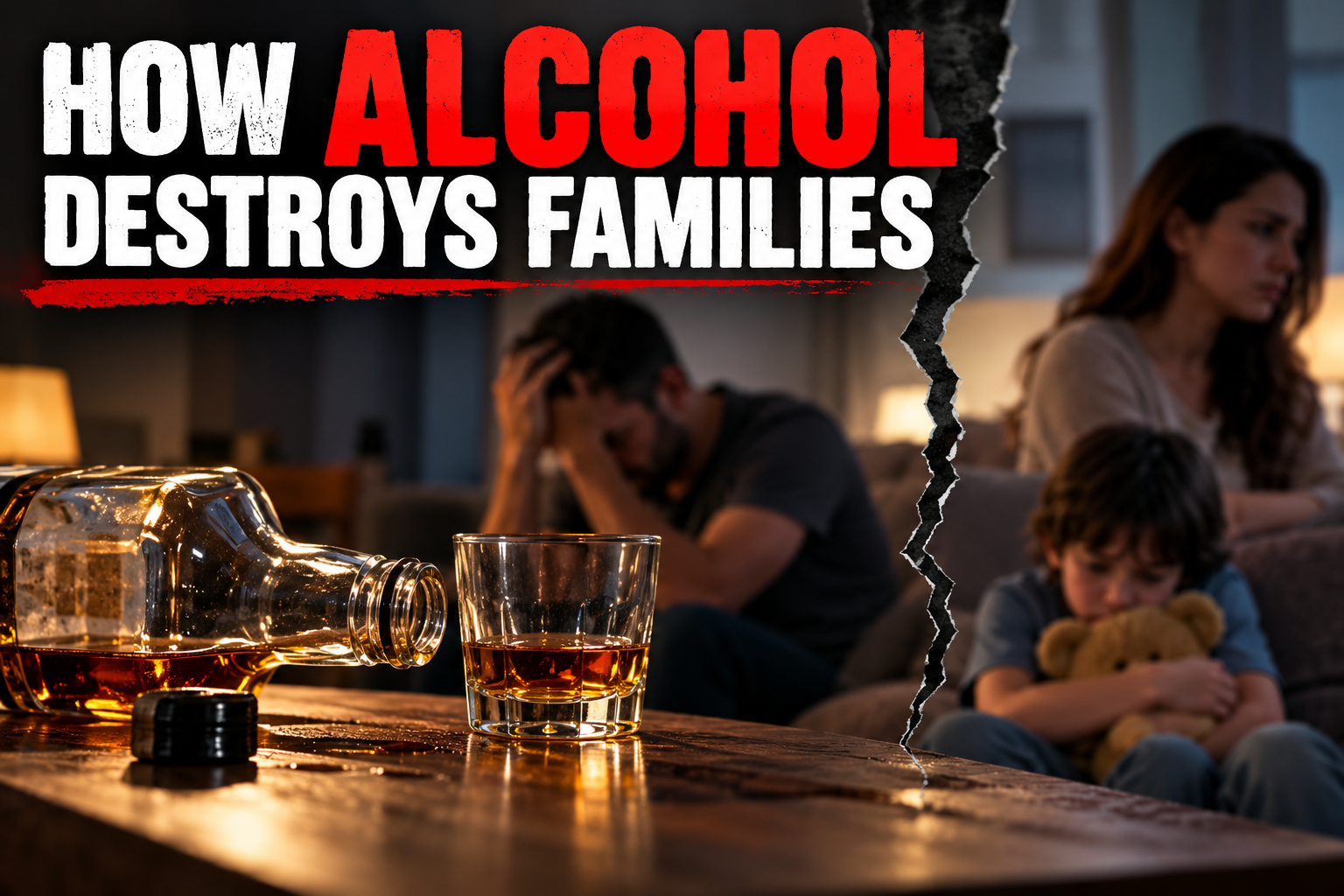
Most families don’t fall apart over a single drink or a single night. The damage builds slowly: a promise broken here, a bill unpaid there, a child who learns to read the mood at the front door, a spouse who stops asking questions because the answers hurt. By the time the problem has a name, everyone in the house has been affected.
This guide explains how alcohol harms families, from marriage and money to children and safety, what the warning signs look like, and what families can do. We use a strong title because it reflects how many people search, but the message is not hopeless. Families do recover, and recovery often starts with understanding what is really happening. This is general information, not medical or legal advice.
In short
- Alcohol use disorder is sometimes called a “family illness” because it affects everyone who lives with it, not only the person who drinks.
- The harm shows up in trust, money, marriage, parenting, health and safety, and children are especially vulnerable.
- If there is violence, threats or fear, safety comes first. Call 112, or the Women Helpline 181, or Childline 1098 for children.
- Families can protect themselves by setting boundaries, stopping enabling, getting support and encouraging treatment.
- Recovery for the drinker doesn’t automatically heal the family. The family needs support and healing too.
Why alcohol affects the whole family
A family is a connected system. When one person’s drinking becomes the centre of attention, everyone else adjusts around it: covering for them, walking on eggshells, taking on extra roles, keeping secrets. These adjustments help people cope in the short run but cost them over time, through stress, anxiety, exhaustion and lost closeness.
Alcohol use disorder is a health condition, not a moral failing, and most people who drink too much do not want to hurt their families. But intent doesn’t undo impact, and both the person who drinks and the people who love them need care.
How alcohol harms families
| Area | What can happen |
|---|---|
| Trust and communication | Lying, broken promises and hidden drinking erode trust. Conversations become arguments, or stop altogether. |
| Home atmosphere | Tension, unpredictability and fear. Family members learn to watch for mood changes and avoid triggering conflict. |
| Money | Spending on alcohol, lost income, debts and unpaid bills. Essentials such as food, school fees and rent can suffer. |
| Marriage and intimacy | Resentment, emotional distance, loss of respect and loneliness. Some partners feel they are raising an extra child. |
| Parenting | Missed school events, inconsistent discipline, neglect of routines and emotional unavailability |
| Violence and safety | Drinking is associated with a higher risk of arguments turning violent, as well as accidents and drink-driving. See the safety section below. |
| Health | Liver, heart and stomach problems, injuries and mental health conditions for the person drinking, and stress-related illness, anxiety, depression and poor sleep in those around them |
| Work and reputation | Missed work, job loss, social embarrassment and withdrawal from friends and relatives |
| Extended family | Conflict with in-laws and relatives, blame and pressure on spouses, and strained support from the wider family |
How it affects children
Children notice far more than adults think, and they often blame themselves. Research on children of parents with alcohol problems suggests they are at higher risk of anxiety, depression, behavioural and school difficulties and, later in life, of alcohol or drug problems themselves. This is a risk, not a certainty, and many children do well, especially when they have a stable, caring adult in their lives.
| Age | What you may notice |
|---|---|
| Young children | Clinginess, fear, sleep problems, bed-wetting, tantrums, stomach aches |
| School-age children | Anxiety, falling grades, difficulty concentrating, aggression, trying to be “perfect,” hiding things from friends |
| Teenagers | Anger, withdrawal, staying away from home, risk-taking, early alcohol or drug use, low mood |
| Adult children | Difficulty trusting, over-responsibility, anxiety, relationship problems, fear of repeating the pattern |
What protects children: at least one consistent, caring adult, predictable routines, honest age-appropriate explanations (“Papa has an illness called alcohol addiction; it’s not your fault”), permission to talk, and support at school. If a child is in danger, contact Childline on 1098.
How it affects the spouse or partner
Partners often carry the heaviest daily load. They may manage the money, cover for missed work, make excuses to relatives, parent alone and live with fear or shame. Over time this can lead to anxiety, depression, exhaustion, health problems and isolation. Many partners also lose sight of their own needs. This is not weakness. It is what prolonged stress does to people. Getting support for yourself is not disloyalty.
The impact on parents, siblings and the wider family
In many Indian households, drinking affects parents, siblings, in-laws and grandparents too. Elderly parents may worry quietly or lose financial security. Siblings can be pulled into rescuing or resentment. Women may face pressure to “adjust” or stay silent for the family’s reputation. Agreeing on one consistent message across the family helps, as does recognising that everyone’s pain is real.
Money: the quiet damage
Alcohol costs money directly, and indirectly through lost work, accidents, medical bills and debts. When money disappears into drinking, families often cut food, education or healthcare first, and women and children usually bear the brunt. Taking practical steps can help:
- Secure your own savings, bank accounts and cards, and keep copies of important documents
- Pay essentials such as rent, school fees and groceries directly instead of handing over cash
- Avoid taking loans from moneylenders or instant loan apps to cover alcohol-related debts
- Seek financial or legal advice if debts are growing
Violence and safety
Alcohol doesn’t cause violence by itself, and many people who drink are never violent. But studies, including in India, consistently find an association between heavy drinking and domestic violence. Alcohol can lower self-control and escalate arguments, and it is also sometimes used as an excuse. Whatever the reason, violence is never acceptable and is never your fault.
- In immediate danger, call 112.
- Women Helpline 181 offers support to women facing violence.
- Childline 1098 helps children in distress.
- India’s Protection of Women from Domestic Violence Act, 2005 provides legal remedies, including protection orders. Take legal advice or contact a protection officer or local legal services authority.
- Have a safety plan: a bag with documents and essentials, a safe place to go and people you can call.
Warning signs that drinking is harming your family
- Family members avoid being home when the person is drinking
- Money, food or bills are regularly short because of alcohol
- Arguments, shouting or violence often follow drinking
- The person lies about, hides or minimises their drinking
- Children seem anxious, withdrawn or are struggling at school
- Family members make excuses to others, or feel they need to protect the person from consequences
- The person has tried and failed to cut down
- Drinking continues despite health, job or legal problems
If you are unsure whether it is heavy drinking or addiction, our guide to alcohol use disorder vs heavy drinking explains the difference, and the person can try our confidential self-screening. It is not a diagnosis.
What families can do
- Put safety first. If there is violence or a threat, get yourself and your children to safety before anything else.
- Learn about alcohol use disorder. Understanding that it is a health condition helps you respond with firmness and care instead of only anger.
- Talk when everyone is calm and sober. Describe specific things you’ve seen, use “I” statements and avoid labels. Our guide on how to talk to a parent or spouse about getting help offers wording you can adapt.
- Set boundaries and stick to them. For example: no drinking at home around the children, no driving after drinking, no giving money for alcohol.
- Stop enabling. Avoid paying debts, covering for missed work, lying to relatives or hiding the consequences.
- Encourage a medical assessment. A doctor can judge severity and whether detox needs supervision. See how to detox your body from alcohol, because stopping suddenly after heavy drinking can be dangerous.
- Get support for yourself. Speak to a counsellor, and consider family support groups such as Al-Anon and Alateen.
- Involve the family in treatment. Family therapy repairs trust and teaches everyone how to support recovery without enabling.
Research on family-based approaches such as Community Reinforcement and Family Training (CRAFT) suggests that families who learn these skills are more likely to get a reluctant person into treatment than families who rely on confrontation or waiting for a crisis.
Can a family heal?
Yes, though it takes time and effort from everyone. When the person stops drinking, relief is often mixed with anger, grief, distrust and fear of relapse. This is normal. Healing usually involves:
- Treatment for the person who drinks, including therapy and aftercare
- Support for the family, through counselling, family therapy and peer groups
- Rebuilding trust gradually, through consistent behaviour rather than promises
- Honest conversations about what happened, ideally with a professional guiding them
- Care for children, including space to ask questions and talk about their feelings
- New routines and shared activities that don’t involve alcohol
Our guide on how to support an addict in recovery explains the stage after treatment begins, and our relapse prevention program explains how to plan for slips.
What if they won’t change?
You cannot make an adult stop drinking, and you are not responsible for whether they do. You can keep the door open to treatment, hold your boundaries, protect your children and finances, and build your own support. If the drinking continues and your safety or your children’s wellbeing is at risk, you may need to consider stepping away, such as living apart for a time. That is a hard decision and not a failure. A counsellor or legal adviser can help you think it through.
Practical tips for India
- Stigma and “log kya kahenge.” Fear of gossip keeps many families silent for years. Choose confidential support and one or two trusted people.
- Pressure to “adjust.” Women are often told to be patient and protect the family’s reputation. Your health and safety matter, and you are entitled to help.
- Social drinking culture. Weddings, festivals and work events often centre on alcohol. People in recovery may need to skip them early on, and families can support that.
- Joint family. Agree among relatives that nobody gives money for alcohol or drinks “just one” with the person.
- Choose a registered, professional centre. Avoid unlicensed “de-addiction” centres, forced confinement and miracle cures. The Mental Healthcare Act, 2017 emphasises rights and consent.
- Costs. See our page on the cost of treatment and our guide on whether health insurance covers rehab.
- Free support. Tele-MANAS (14416) offers free tele-mental-health support.
When to get urgent help
Call 112 or go to the nearest hospital if:
- Anyone is being hurt, threatened or is afraid for their safety
- The person has a seizure, severe confusion or hallucinations after stopping or cutting down
- They are very drowsy, can’t be woken, or are breathing slowly or irregularly after drinking
- They are vomiting blood, or have black stools or yellow skin and a swollen belly
- Someone talks about ending their life or hurting themselves
- A child is at risk. Contact Childline 1098
In India, Women Helpline 181 supports women in distress, and Tele-MANAS (14416) is a free national mental health helpline.
Special situations
When the mother or a woman in the family drinks. Women often face extra shame and are less likely to seek help. Treatment that is confidential and sensitive helps. See our signature women’s program.
Teen or young adult drinking. Stay calm, avoid public shaming, involve a professional and keep communication open.
Alcohol with depression, anxiety or other drugs. These often occur together and need to be treated together. See dual diagnosis.
Drinking in older adults. Medicines, falls and health conditions make alcohol more dangerous. Seek medical advice.
When helping starts to harm
Caring can slip into enabling or control. Be alert if you find yourself:
- Paying debts, making excuses or covering for missed work
- Hiding or pouring away alcohol and constantly monitoring
- Lying to relatives or children to protect the person
- Neglecting your own health, sleep, work or friendships
- Believing you are responsible for whether they drink
You can care deeply and still step back from rescuing. A counsellor can help you find the balance.
Look after yourself too
- Talk to a counsellor or a trusted friend
- Consider Al-Anon or Alateen, where you can meet others in similar situations
- Keep your own routines, sleep, movement and interests
- Practise calming habits. See mindfulness for wellbeing and addiction recovery
- Give yourself permission to take breaks
How Thamarai can help
At Thamarai Healing Center in Pollachi, alcohol addiction treatment is confidential, non-judgemental and personalised, with family involvement built in. Care includes a comprehensive assessment, supervised detoxification where needed, evidence-based therapies such as those in our schools of therapy, support for co-occurring conditions and structured aftercare. If you are weighing options, what happens in the first week of residential rehab explains what to expect, and you can read about The Thamarai Difference.
If alcohol is affecting your family, a confidential conversation is a good place to start. Speak to our team confidentially →
Frequently asked questions
How does alcohol destroy families?
Heavy drinking erodes trust and communication, drains money, strains marriages, disrupts parenting, harms health and can lead to violence and accidents. Children and partners often carry the hidden cost.
How does a parent’s drinking affect children?
Children may feel anxious, unsafe or to blame, and are at higher risk of emotional, behavioural, school and later substance problems. A stable, caring adult, routines and honest explanations help protect them.
Is alcohol addiction a family disease?
It is often called a family illness because it affects everyone in the household, and family support improves outcomes. It is a health condition in the person who drinks, and families need care too.
How do I protect my children from a drinking parent?
Keep them safe, maintain routines, explain honestly in simple terms, make sure they know it isn’t their fault and keep one calm, caring adult available. In danger, call 112 or Childline 1098.
Can a family recover from alcoholism?
Yes. With treatment for the person, support for the family and gradual rebuilding of trust, many families heal, though it takes time and effort from everyone.
Should I leave a spouse who drinks?
Safety comes first. If there is violence or serious risk, seek help and consider leaving. Otherwise, you can set boundaries, encourage treatment and seek your own support. A counsellor or legal adviser can help you decide.
How can I get my husband or family member to stop drinking?
You can’t force an adult to stop, but you can speak calmly, set boundaries, stop enabling and encourage a medical assessment and treatment. Don’t push them to stop suddenly, as withdrawal can be dangerous.
Is treatment at Thamarai confidential?
Yes. Enquiries, assessments and treatment are handled confidentially, and you can call to ask questions without committing to anything.
This article is for general information and isn’t a substitute for professional medical, legal or safety advice. If you are in danger, call 112.
Sources
- World Health Organization. Alcohol fact sheet.
- Velleman R, Templeton L. Understanding and modifying the impact of parents’ substance misuse on children. Advances in Psychiatric Treatment, 2007.
- Smith JE, Meyers RJ. Motivating Substance Abusers to Enter Treatment: Working with Family Members. Guilford Press, 2004.
- American Psychiatric Association. Diagnostic and Statistical Manual of Mental Disorders, Fifth Edition, Text Revision (DSM-5-TR). 2022. Alcohol use disorder.
- Government of India. Protection of Women from Domestic Violence Act, 2005; Mental Healthcare Act, 2017.
- Ministry of Women and Child Development, Government of India. Women Helpline (181); Childline (1098). Ministry of Health and Family Welfare. Tele-MANAS (14416).