
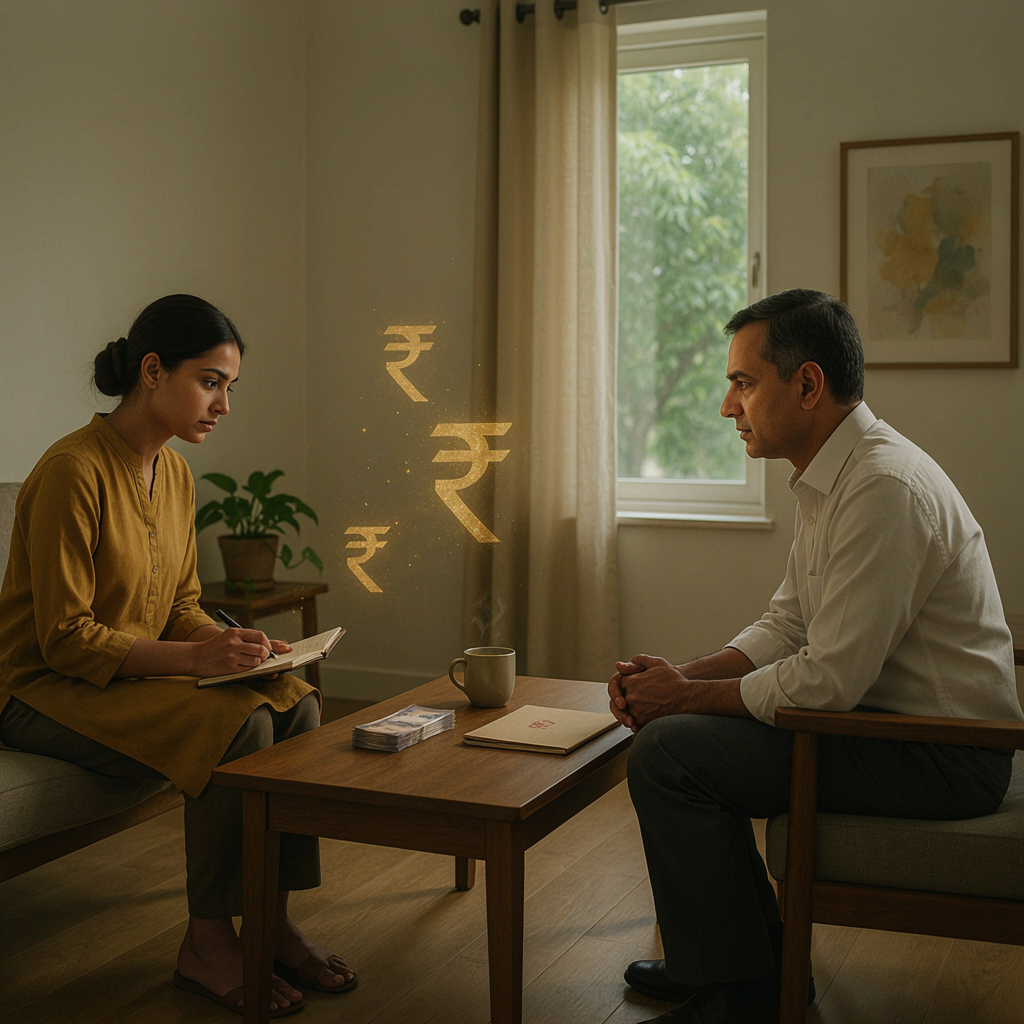
There is no single answer to “how much does therapy cost in India” – and any article that gives you one number is oversimplifying. Fees can range from a few hundred rupees at lower-cost or public settings to several thousand rupees per session with private practitioners, and a structured residential treatment programme is priced on an entirely different basis altogether.
The real cost of therapy depends on:
- the type of therapy or professional you see (counsellor, clinical psychologist, or psychiatrist)
- their qualifications and years of experience
- the city or location
- session length and frequency
- whether you’re attending individually or as a family
- whether psychiatric or medication support is involved
- how complex or severe the concern is
- and – most significantly – whether outpatient therapy is enough, or whether structured/residential care is being considered
This guide walks through each of these factors honestly, so you can understand not just a price range, but what you’re actually paying for – and how to think about cost if you or a family member may need more structured support.
This article is for general education. It does not replace a professional clinical assessment. If you are in crisis or having thoughts of self-harm, contact Tele-MANAS, India’s free national mental health helpline (14416 / 1800-891-4416), or your nearest hospital immediately.
How Much Does Therapy Cost in India?
Across several current, publicly available Indian therapy directories and platform pricing pages, individual therapy sessions are commonly advertised somewhere between ₹500 and ₹6,000 per session. This range is drawn from multiple current Indian therapy-cost sources, including Therapy Council and ElloMind (both citing a similar ₹500–₹6,000 span), alongside NurtureMind (₹800–₹5,000+) and TherapyRoute (which separates advertised private rates from official institutional fees such as NIMHANS and AIIMS OPD charges). This is best understood as an indicative range of publicly advertised private-sector rates, not an official national average – India has no centrally regulated fee schedule for psychotherapy or counselling, so two therapists with similar qualifications in different cities, or even the same city, can charge very different fees.
Broadly, the pattern looks like this:
| Type of care | Typical pricing considerations | What may be included |
| Individual therapy | Per-session fee, varies with therapist type and city | One-to-one therapy session |
| Psychiatric consultation | Consultation fee, priced independently of therapy fees | Assessment and medication review, where appropriate |
| Family therapy | Per-session fee | Family-focused therapeutic work |
| Group therapy | Usually a lower per-person cost | Structured group sessions |
| Intensive/structured programmes | Programme-based pricing rather than per-session | Multiple therapeutic and support services combined |
| Residential treatment | Depends on duration and level of care required | Accommodation plus structured clinical and therapeutic support |
At the lower end, government and public-sector institutions such as NIMHANS and AIIMS run outpatient psychiatry departments with nominal registration fees, and Tele-MANAS offers free telephonic support. At the higher end, senior clinical psychologists and psychiatrists in metro cities such as Mumbai, Delhi, and Bengaluru advertise premium rates. Neither end of that spectrum tells you what you will pay – only a conversation with a specific provider can.
Want to understand which level of care may be appropriate for your situation? Speak confidentially with the Thamarai team →
Why Does Therapy Cost So Much – Or So Little?
Once you understand what drives the variation, the range above starts to make sense.
Therapist qualifications and experience. Fees can vary according to professional qualification, clinical specialisation, experience, location and demand – there is no universal pricing hierarchy between counsellors, psychologists and psychiatrists. What does matter clinically is the type of professional: psychiatrists are medical doctors who can assess medical and psychiatric conditions and prescribe medication where appropriate, while counsellors and psychologists are trained to deliver talk-based therapy. Years of specialised clinical experience tend to shift fees upward across all these categories, much like in any other professional field.
Type of therapy. General supportive counselling is usually priced differently from specialised, structured approaches such as trauma-focused therapy, certain behavioural interventions, or intensive family therapy, which demand additional training and preparation time.
Session frequency. Weekly outpatient therapy is priced very differently from intensive, multiple-sessions-a-week support, which is closer to a structured programme than a single service.
Location. Fees in metro cities tend to sit at the top of the range, driven by clinic overheads and demand. Tier-2 and smaller cities are often more affordable, though quality of care isn’t determined by geography alone.
Severity and complexity. Straightforward, single-issue concerns are generally more predictable to treat than presentations involving multiple co-occurring conditions, which may require a multidisciplinary assessment involving more than one professional.
Psychiatric involvement. Some individuals need psychotherapy alone; others benefit from psychiatric assessment and medication management alongside it. This adds a consultation cost, but is a clinical decision, not an automatic add-on.
Level of care. This is the single biggest driver of overall cost. A weekly outpatient session and a structured residential programme are not different prices for the same service – they are fundamentally different levels of care, discussed further below.
Therapy vs Psychiatric Treatment: What’s the Difference?
These two terms are often used loosely, which makes cost comparisons confusing.
Psychotherapy (also called counselling or talk therapy) is a structured, talking-based treatment delivered by a trained therapist or psychologist. It focuses on thought patterns, behaviour, emotional processing, or relationships, depending on the approach used.
Psychiatric assessment is conducted by a psychiatrist – a medical doctor with specialised mental health training – and can include diagnosis, physical health considerations, and medication management where clinically appropriate.
Multidisciplinary care combines both, sometimes alongside other professionals such as family therapists, depending on individual need.
These approaches are complementary, not competing. Medication is not necessary for everyone – many people improve significantly through therapy alone – but for some conditions or symptom severities, a combined approach is what a qualified clinician would recommend after assessment.
How Much Does Mental Health Treatment Cost Beyond a Single Therapy Session?
Comparing only the per-session therapy fee can be misleading once someone needs more than weekly outpatient support. A single session price doesn’t capture what a full course of care may actually involve.
Depending on individual need, mental health treatment can include:
- an initial clinical assessment
- psychiatric evaluation, where indicated
- individual therapy sessions
- group therapy
- family sessions
- medication review and monitoring
- structured daily routines, in a residential setting
- wellness or adjunct support (such as exercise or activity-based programmes)
- accommodation, where residential care is appropriate
- aftercare and relapse-prevention planning
The total cost of treatment – as opposed to a single session – depends far more on the level of care and duration required than on any individual session fee. This is exactly why “how much does therapy cost” and “how much does treatment cost” are often two different questions.
When Is Outpatient Therapy Enough?
For a large number of people, regular outpatient therapy is entirely appropriate and effective. This is often the case when someone:
- can maintain their daily responsibilities – work, study, family life
- is reasonably stable, without an immediate safety concern
- has a supportive or at least safe home environment
- is able to attend sessions consistently
- does not need continuous, structured supervision or support between sessions
This isn’t a diagnostic checklist – it’s a general pattern. Whether outpatient therapy is sufficient for a specific person is a clinical judgement, best made through an actual assessment rather than a self-check online.
When Might Residential Treatment Be Worth Considering?
Structured residential treatment is a different level of care, and it isn’t automatically “better” than outpatient therapy – it exists for situations where outpatient support isn’t enough on its own. It may be worth considering when someone has:
- significant impairment in daily functioning
- severe or complex symptoms
- made repeated, unsuccessful attempts at outpatient treatment
- co-occurring mental health and substance-use concerns
- difficulty sustaining progress within their current home or work environment
- a need for structured, round-the-clock support that outpatient visits can’t provide
- safety concerns that call for a higher level of clinical oversight
Whether residential care is the right next step – for yourself or a family member – depends on individual clinical assessment, not on how severe things feel in the moment. A qualified team can help you understand which level of care actually fits the situation.
Considering structured residential support? Discuss your situation privately with Thamarai →
What Should You Look For When Comparing Therapy Centres?
Once cost enters the conversation, it helps to know what you’re actually comparing. A useful buyer’s checklist:
- Qualified clinical professionals – are therapists, psychologists, and psychiatrists appropriately trained and registered?
- Individualised assessment – is your treatment plan built around your specific history, or a fixed template applied to everyone?
- Evidence-based treatment – are the therapeutic approaches used ones with a recognised clinical basis?
- Clear explanation of what the fee includes – sessions only, or assessment, medication review, and follow-up too?
- Transparency around additional costs – are there costs that might apply later, such as extended stay or additional consultations?
- Family involvement where appropriate – is there a structured way for family to be part of the process?
- Aftercare planning – does support extend beyond discharge, or end abruptly?
- Confidentiality and privacy – how are enquiries, admissions, and records handled?
- Appropriate level of care – does the centre help you determine whether outpatient or residential care actually fits, rather than defaulting to one?
- A clear admissions process – can you get a straightforward answer about what happens next, and what it costs?
A centre that can answer these clearly, without pressure, is generally a stronger sign of quality than the headline price alone.
What Does the Cost of Therapy Actually Include?
Before comparing prices between providers, it’s worth asking what a quoted figure actually covers. Does it include:
- the initial assessment
- individual therapy sessions
- psychiatric consultation, if required
- medication, if prescribed
- diagnostic testing or screening tools, where needed
- family therapy sessions
- group therapy
- accommodation, for residential care
- meals
- wellness or activity-based programming
- aftercare and follow-up support
A lower headline price does not necessarily mean lower overall cost, and a higher price does not automatically mean better treatment. What matters is transparency about what’s included, and whether the level of care matches what’s clinically appropriate. Two “therapy” quotes that look similar on paper can represent very different scopes of care – so it’s worth comparing clinician qualifications, whether assessment is included, the number and frequency of sessions, whether psychiatric involvement or family/group therapy is part of the plan, accommodation and medical supervision where relevant, aftercare, and – just as importantly – what’s charged separately rather than included upfront.
What About Therapy at Thamarai Healing Center?
Thamarai Healing Center is a private residential treatment centre in Pollachi, at the foothills of the Anaimalai mountain ranges, offering individualised mental-health and addiction care in a structured, confidential setting.
Rather than a single fixed service, care at Thamarai is built around the individual, and typically involves some combination of:
- an individual clinical assessment
- an individualised treatment plan based on that assessment
- evidence-based psychological therapies
- psychiatric review and medication management, where clinically indicated
- family involvement, where appropriate to the person’s situation
- structured residential support for individuals for whom this level of care is suitable
- relapse-prevention planning
- structured aftercare once a residential stay ends
Thamarai is intended for people for whom outpatient therapy alone hasn’t been sufficient, or whose situation calls for a more structured, supervised environment – decided through assessment, not assumption.
How Much Does Treatment at Thamarai Cost?
There is no single treatment price, because the cost depends on the individual’s clinical needs, the structure of the recommended programme, and the duration of stay. This is true of most legitimate residential treatment centres – pricing follows the person, not a fixed package.
What typically affects the final cost includes:
- the initial clinical assessment
- the specific treatment needs identified
- the expected duration of care
- the level of support and supervision required
- whether residential accommodation is part of the plan
- which therapies are included in the individual plan
- aftercare and follow-up support
The most accurate way to understand what treatment would cost in your situation is to discuss it confidentially with the Thamarai team, who can walk you through current pricing once your circumstances are understood.
Request Current Treatment Pricing →
Questions to Ask Before Paying for Therapy or Treatment
Whichever provider you’re considering – Thamarai or otherwise – these questions are worth asking upfront:
- What exactly is included in the quoted fee?
- Is the initial assessment included, or billed separately?
- Are psychiatric consultations separate from therapy fees?
- Are medications included in the price, or billed on top?
- How often will therapy actually take place?
- Is family therapy available, and is it included?
- What happens if the treatment plan needs to change partway through?
- What kind of support is available after the programme ends?
- Is residential care genuinely appropriate for my situation, or would outpatient therapy be enough?
A provider willing to answer these clearly, before you commit financially, is generally one worth trusting with something as personal as mental health care.
Frequently Asked Questions
How much does therapy cost in India?
Individual therapy sessions are commonly advertised somewhere between ₹500 and ₹6,000, based on publicly listed rates from Indian therapy directories and platforms. There is no official national fee schedule for psychotherapy, so this should be treated as an indicative market range rather than a fixed or guaranteed price.
Why do therapy fees vary so much in India?
Fees vary because India has no centrally regulated pricing structure for psychotherapy. Therapist qualifications, years of experience, location, therapy type, and session frequency all influence what a provider charges.
Is online therapy cheaper than in-person therapy?
Online therapy may be more affordable in some cases because it can reduce travel and clinic-related costs, but fees vary by provider, clinician and platform. The more important question is whether the format is appropriate for your needs.
How much does a psychiatrist consultation cost?
Psychiatric consultation fees vary by city, experience and clinic, and there is no fixed or universal rate. As psychiatrists are medical doctors who can assess psychiatric conditions and prescribe medication where appropriate, their consultations are priced independently of standard counselling fees rather than following a fixed ratio to them.
Does therapy cost more for complex mental-health conditions?
It can. More complex or co-occurring presentations may require a multidisciplinary assessment involving more than one professional, which typically increases the overall cost of care compared to a single, straightforward concern.
Is residential mental-health treatment more expensive than outpatient therapy?
Generally, yes – residential treatment includes accommodation, structured daily support, and a broader combination of services, so it is priced very differently from a single outpatient session. It represents a different level of care, not simply “more” of the same service.
What is included in a residential treatment programme?
This varies by centre, but may include clinical assessment, individual and group therapy, psychiatric review, family involvement, accommodation, structured daily routines, and aftercare planning. It’s worth confirming exactly what’s included before comparing prices between centres.
How can I find out how much treatment at Thamarai costs?
Because cost depends on individual clinical needs and programme duration, the most accurate way to get pricing is to speak confidentially with the Thamarai team, who can discuss your situation and current costs directly.
Not sure what kind of support you or a family member need? The most useful next step is often a confidential conversation, not a price comparison. Start with a confidential conversation with Thamarai Healing Center →
A note on this article
This article is intended for general education about how therapy and mental health treatment are typically priced in India. It does not constitute medical advice, and it does not replace an individual clinical assessment. Because India has no single national fee schedule for private psychotherapy, the pricing figures in this article should be treated as indicative, publicly advertised rates from Indian therapy directories and platforms – not official government data or an industry-wide average – and will vary by provider. If you are experiencing a mental health crisis or having thoughts of self-harm, please contact Tele-MANAS (14416 / 1800-891-4416), your nearest hospital, or the emergency helpline (112) immediately.
References
Clinical / mental health references
- World Health Organization – Mental Health Fact Sheet
- National Institute of Mental Health and Neurosciences (NIMHANS) – nimhans.ac.in
- Tele-MANAS – National Tele Mental Health Programme, Government of India
- Government of India – Mental Healthcare Act, 2017
- American Psychiatric Association – DSM-5-TR overview
Pricing references (these, not the clinical sources above, support the indicative session-fee range cited in this article)
- Therapy Council – Therapy Costs in India
- ElloMind – How Much Does Therapy Cost in India?
- NurtureMind – How Much Does Therapy Cost in India?
- TherapyRoute – How Much Does Therapy Cost in India?
These are publicly advertised private-sector rates reported by independent Indian therapy-cost resources, not an official government or industry-wide fee schedule.