
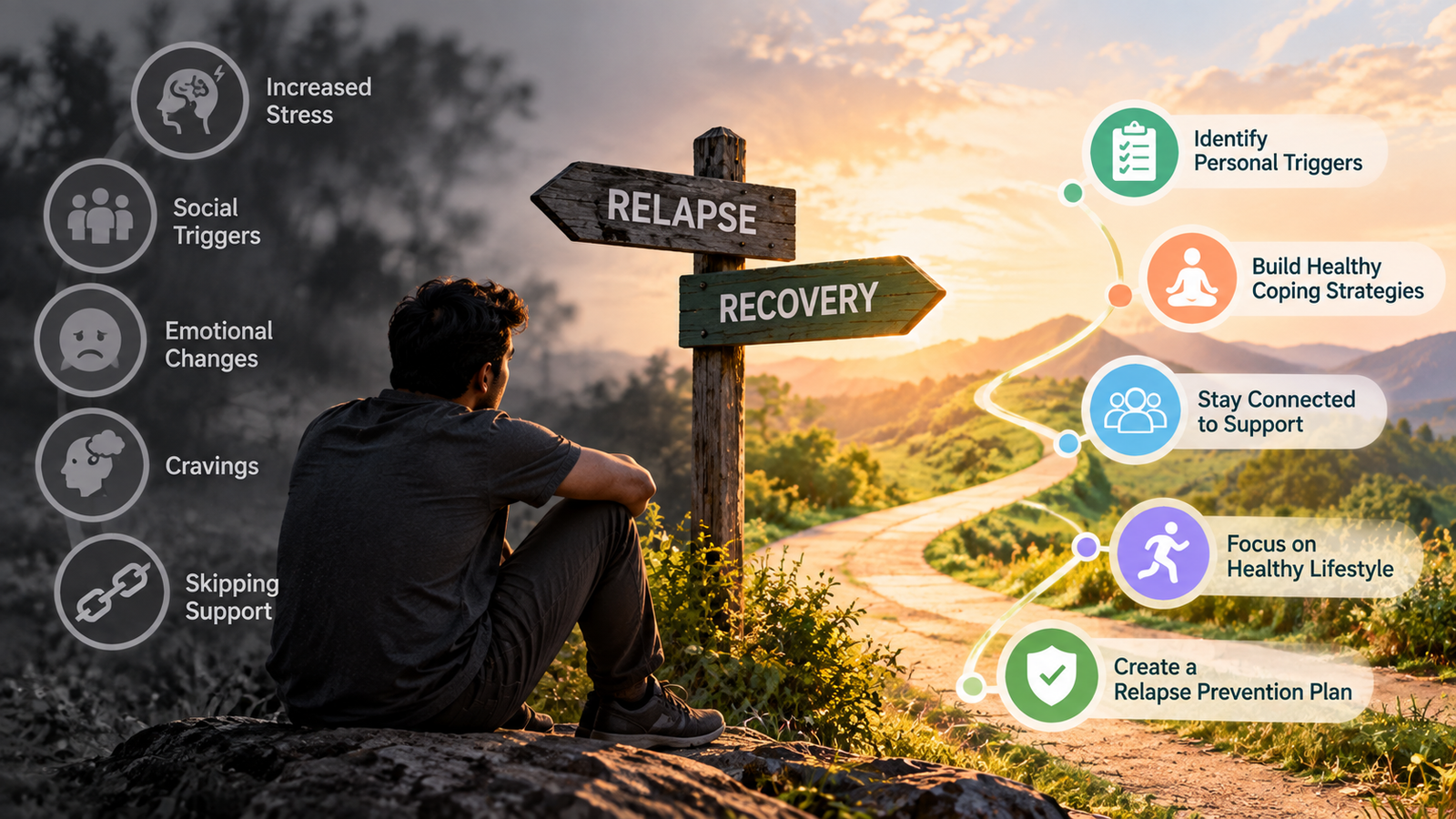
If you or someone you love has returned to drinking or using drugs after rehab, it can feel like everything that was achieved has been undone. It hasn’t. Relapse is a common part of the recovery journey for many people, not a sign that treatment failed or that the person is beyond help.
This guide explains what relapse actually is, the warning signs that often come before it, and how to build a relapse prevention plan. It is general information, not medical advice. If you or someone else has relapsed, please reach out for professional support.
In short
- Relapse is common. Research consistently frames addiction as a condition with relapse rates similar to other chronic illnesses such as diabetes or hypertension.
- Relapse usually happens in stages, emotional, mental, then physical, often with warning signs well before someone actually drinks or uses again.
- A relapse prevention plan identifies personal triggers, builds coping strategies, and sets out exactly what to do if warning signs appear.
- A relapse is not the same as treatment failing. It’s information, and it usually means the plan needs adjusting, not abandoning.
- Getting back into treatment quickly after a relapse matters more than how the relapse happened.
What relapse actually means
“Relapse” is often pictured as a single dramatic moment, someone picking up a drink after months of sobriety. In reality, most researchers and clinicians describe relapse as a process that unfolds over time, not a single event. By the time someone actually drinks or uses a substance again, warning signs have often been building for days, weeks, or sometimes longer.
This distinction matters because it means relapse can often be caught and interrupted before it happens, if the warning signs are recognised early enough.
It’s also worth naming a related but different experience: a single slip, sometimes called a “lapse”, where someone drinks or uses once and then stops again, is not the same as a full return to the old pattern. Both deserve a compassionate, practical response rather than shame.
Why relapse happens: it’s not a character flaw
Addiction changes how the brain processes reward, stress, and decision-making, which is part of why the National Institute on Drug Abuse (NIDA) and other major health bodies describe addiction as a chronic, relapsing brain condition, similar in that respect to other long-term illnesses. NIDA has noted that relapse rates for substance use disorders are comparable to relapse rates for chronic medical conditions like type 1 diabetes, hypertension, and asthma, conditions no one would call a personal failure when symptoms return.
Common contributors to relapse include:
- Ongoing cravings, especially in early recovery
- Stress, whether from work, relationships, or daily life
- Exposure to people, places, or situations linked to past substance use
- Untreated or under-treated mental health conditions such as anxiety or depression
- Isolation and loss of support networks
- Overconfidence, sometimes stopping therapy or aftercare too early because things feel “fine”
- Poor sleep, poor nutrition, or physical illness
- Major life changes, both difficult ones and, sometimes, positive ones
The three stages of relapse
Addiction specialists, drawing on relapse prevention models developed by researchers such as Terence Gorski, commonly describe relapse as unfolding in three overlapping stages.
1. Emotional relapse. The person isn’t thinking about using, but their emotions and behaviours are quietly setting the stage. Signs can include:
- Bottling up emotions instead of talking about them
- Isolating from others, including from support groups or sponsors
- Skipping therapy sessions, meetings, or aftercare
- Poor self-care: irregular eating, sleeping, or exercise
- Increasing anxiety, irritability, or mood swings
2. Mental relapse. An internal tug-of-war begins. Part of the person wants to stay in recovery; another part is thinking about using. Signs can include:
- Craving alcohol or drugs
- Thinking about people, places, or things associated with past use
- Minimising the consequences of past substance use (“it wasn’t that bad”)
- Bargaining (“just this once won’t hurt”)
- Actively or passively planning a relapse, for example being around substances “by accident” on purpose
- Lying to others about thoughts or feelings
3. Physical relapse. The person actually drinks or uses a substance again. Without intervention, this often escalates back toward the earlier pattern, though how quickly and how far varies by person.
The value of this framework is that it shows relapse prevention isn’t only about willpower in a single risky moment. It’s about recognising the emotional and mental warning signs early, when there’s still the most room to change course.
Warning signs to watch for, in yourself or someone else
- Withdrawing from family, friends, therapy, or support groups
- Romanticising past drinking or drug use (“remembering the good times” without the consequences)
- Increased secrecy or defensiveness
- Neglecting routines that support recovery, such as sleep, meals, or exercise
- Returning to old friendships or environments linked with substance use
- Dismissing or skipping aftercare, therapy, or check-ins
- Sudden overconfidence about being “cured” or no longer needing support
- Increased stress, conflict, or a major life change without a plan to cope with it
If you notice several of these, in yourself or someone you care about, that’s the moment to act, not to wait and see.
How to build a relapse prevention plan
A relapse prevention plan is a written, practical document, not just an intention to “be more careful.” It typically includes:
1. Your personal triggers. People, places, situations, emotions, or times of day that increase your risk. Being specific matters more than being general.
2. Early warning signs, specific to you. What does your emotional and mental relapse usually look like? Recognising your own pattern is more useful than a generic checklist.
3. Coping strategies for each trigger. For example, what will you actually do if you’re invited to an event where alcohol will be served, or if a stressful day at work leaves you wanting to use?
4. A support network, named specifically. Who can you call, and at what point? Sponsors, therapists, family members, or peer support groups all play different roles.
5. Healthy routines. Sleep, nutrition, exercise, and stress management aren’t extras, they’re part of what keeps the nervous system stable enough to resist cravings.
6. A plan for treating co-occurring conditions. If you also experience anxiety, depression, or another mental health condition, ongoing treatment for that is part of relapse prevention, not separate from it.
7. A concrete emergency plan. Exactly what to do, and who to contact, the moment a lapse happens or you feel at serious risk. Deciding this in advance, when thinking clearly, matters because decision-making is often impaired in the moment of highest risk.
8. Regular review. A relapse prevention plan isn’t fixed. It should be revisited and updated as circumstances, triggers, and support networks change, often as part of ongoing aftercare.
This work is usually done together with a therapist, often using cognitive behavioural therapy, which specifically helps people identify triggers and build practical coping responses.
What to do if a relapse happens
For the person who has relapsed:
- Reach out for support immediately. Don’t wait until you “feel ready” or have “sorted yourself out” first.
- Avoid the trap of all-or-nothing thinking. One lapse doesn’t erase the progress already made, and how you respond in the next hours matters far more than the lapse itself.
- Contact your treatment team, therapist, or support network as soon as possible.
- If the substance involved carries a risk of dangerous withdrawal, such as alcohol after a period of abstinence, get medical guidance before stopping again on your own. See our guide on alcohol withdrawal and medically supervised detox.
For family and friends:
- Respond with concern, not anger or shame. Shame tends to push people further away from help, not toward it.
- Avoid ultimatums delivered in anger, but do be honest about your own limits and needs.
- Encourage a return to treatment or support rather than trying to manage the situation alone.
- Look after your own wellbeing too. Supporting someone through relapse is genuinely difficult.
Signs that need urgent attention: a suspected overdose, severe withdrawal symptoms such as seizures or confusion, or a mental health crisis. Call 112 or go to the nearest emergency department if any of these occur.
Relapse doesn’t mean starting from zero
One of the most damaging myths about relapse is that it wipes out everything learned in treatment. It doesn’t. The skills, insight, and support relationships built during rehab don’t disappear. What often needs to happen is an honest look at what wasn’t working: were warning signs missed? Was aftercare skipped? Did a mental health condition go untreated? Was the original plan not specific enough?
Many people who eventually achieve long-term recovery have one or more relapses along the way. What distinguishes a setback from a lost cause is usually how quickly someone gets back into treatment and support, and how honestly the plan gets adjusted afterward.
How Thamarai can help
At Thamarai Healing Center in Pollachi, our Relapse Prevention Program is built around exactly this: helping people identify their personal triggers, build practical coping strategies, and strengthen the support systems around them. This sits alongside our broader alcohol and drug addiction treatment, and draws on therapies such as CBT that are specifically designed for this work.
If you or someone you love has relapsed, or you’re worried it might happen, reaching out now is the right step, not a last resort. Speak to our team confidentially →
Frequently asked questions
Does relapse mean treatment didn’t work?
No. Addiction is widely described by researchers as a chronic, relapsing condition, similar in that respect to other long-term illnesses. A relapse usually means the plan needs adjusting, not that treatment failed or is pointless.
How common is relapse after rehab?
Relapse is common, though exact rates vary across studies and depend on the substance, length of treatment, and ongoing aftercare. NIDA compares relapse rates for substance use disorders to those of other chronic conditions like diabetes and hypertension.
What’s the difference between a lapse and a relapse?
A lapse is often described as a single, brief return to substance use that is then stopped, while a full relapse describes a more sustained return to the previous pattern. Both call for a quick, supportive response rather than shame.
What should I do immediately after a relapse?
Reach out to your treatment team, therapist, or support network as soon as possible. If withdrawal risk is a concern, such as after stopping alcohol again, seek medical advice before attempting to stop on your own.
Can someone relapse years into recovery?
Yes. Relapse risk doesn’t disappear entirely, even after a long period of stability, which is part of why ongoing awareness of personal triggers and warning signs remains valuable long-term.
How do I help a family member without enabling them?
Respond with concern rather than anger, encourage a return to treatment, and be clear and honest about your own limits, without issuing ultimatums in the heat of the moment. A therapist or family support programme can help you find that balance.
This article is for general information and isn’t a substitute for professional medical advice, diagnosis or treatment.
Sources
- National Institute on Drug Abuse (NIDA). Treatment and Recovery and Drugs, Brains, and Behavior: The Science of Addiction.
- SAMHSA. Relapse Prevention and the Five Rules of Recovery and treatment improvement protocols on substance use disorder treatment.
- NICE. Coexisting severe mental illness and substance misuse: community health and social care services (NG58), and relevant guidance on alcohol and drug dependence follow-up care.
- Gorski TT, Miller M. Staying Sober: A Guide for Relapse Prevention. Herald House/Independence Press, 1986 (relapse stages framework).
- Marlatt GA, Donovan DM (eds). Relapse Prevention: Maintenance Strategies in the Treatment of Addictive Behaviors. Guilford Press, 2005.