
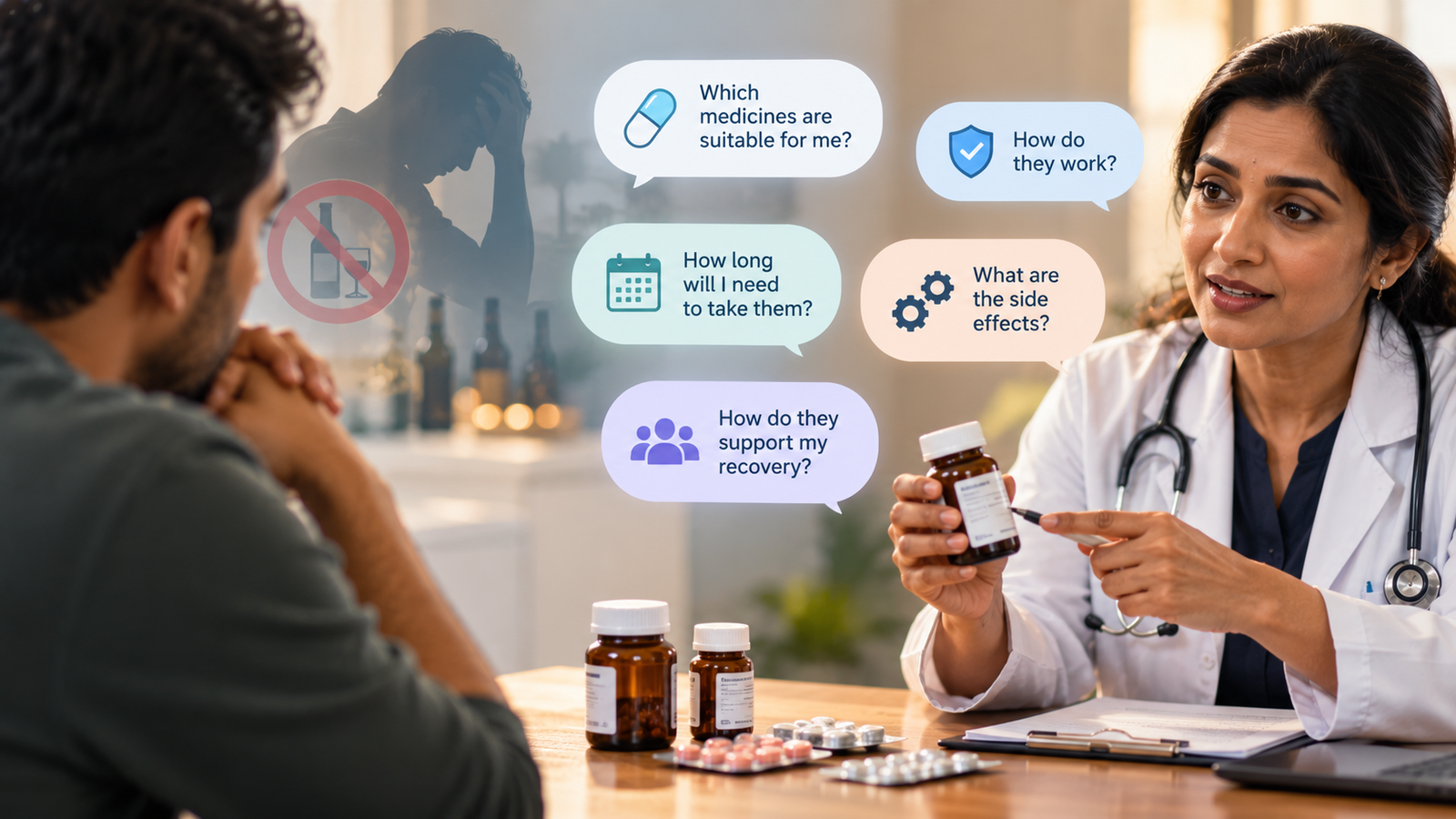
If a psychiatrist has mentioned “starting a medicine” as part of your treatment plan for alcohol dependence, it’s natural to have questions. What does it do? Is it safe? What if I have other health conditions?
This guide explains, in general terms, the categories of medicines used in alcohol dependence treatment and why psychiatrists prescribe them, along with a list of questions worth asking at your appointment. It does not name doses or make prescribing decisions for you. Only your psychiatrist, who knows your full medical history, can decide what’s right for you.
In short
- Medicines are one part of treatment for alcohol dependence, used alongside therapy, not instead of it.
- Different medicines work in different ways: some support withdrawal, some help reduce cravings or drinking, and some are used to discourage drinking.
- Every medicine has to be matched to your health, other conditions and any other medicines you take.
- This article intentionally does not list doses. Dosing is a clinical decision made by your prescriber, based on your individual assessment.
- If you also have depression, anxiety, or another mental health condition alongside alcohol dependence, this is usually treated together, not separately.
Why medicines are used at all
Alcohol dependence changes how the brain’s reward and stress systems work. For many people, willpower and talking therapy alone aren’t enough to overcome the physical pull to drink, particularly cravings. Clinical guidelines, including those from NICE and reviews published by Cochrane, describe medicines as part of a broader treatment plan that also includes psychological therapy, such as cognitive behavioural therapy or motivational enhancement therapy, and structured follow-up care.
Medicines used in this area generally fall into a few broad categories, based on what stage of treatment they support.
The main categories of medicines your psychiatrist may discuss
1. Medicines used during withdrawal (detox).
When someone stops drinking after a period of dependence, the body can go through withdrawal, which ranges from mild discomfort to serious, medical emergencies. Doctors commonly use a class of medicines called benzodiazepines during supervised detox to calm the nervous system and reduce the risk of complications such as seizures. This is always done under medical supervision, with the dose and duration adjusted to the person’s symptoms and monitored closely. Our guide on alcohol withdrawal and medically supervised detox explains this stage in more detail.
2. Medicines that help reduce drinking or support abstinence after detox.
Once withdrawal has passed, some medicines are used for the longer term to help a person stay alcohol-free or drink less. According to NIAAA and NICE, these generally work in one of a few ways:
- Reducing cravings for alcohol, making it easier to resist the urge to drink.
- Blocking the pleasurable effects of alcohol, so drinking becomes less rewarding.
- Creating an unpleasant reaction if alcohol is consumed, which acts as a deterrent for some people.
Cochrane reviews have looked at how well different medicines in this category work, and the evidence varies by medicine and by person; your psychiatrist can explain what the evidence says about any specific option being considered for you.
3. Medicines for related physical health needs.
Long-term heavy drinking can deplete certain vitamins, particularly B vitamins, so doctors often prescribe vitamin supplementation as part of treatment, especially around detox.
4. Medicines for co-occurring mental health conditions.
Many people with alcohol dependence also experience depression, anxiety, or other mental health conditions, sometimes called dual diagnosis. Where this applies, a psychiatrist will usually treat both conditions together, which may include separate medicines for the mental health condition, chosen carefully because of how alcohol and psychiatric medicines can interact. If this applies to you, our guide on dual diagnosis explains why integrated treatment tends to work better than treating each condition separately.
A note on what this article deliberately leaves out. You won’t find drug names paired with dosing information here, because dosing depends on your health, other medicines, kidney and liver function, and other individual factors that only your prescriber can assess. If you’re looking for names of specific medicines to research, ask your psychiatrist directly, they can point you to reliable patient information about whatever they’re considering for you specifically.
How your psychiatrist decides what’s right for you
Before recommending any medicine, a psychiatrist typically considers:
- The severity and pattern of your alcohol dependence
- Your physical health, including liver and kidney function
- Any other mental health conditions
- Any other medicines you currently take, including over-the-counter medicines and supplements
- Your personal goals, for example whether you’re aiming for complete abstinence or reduced drinking
- Your preferences, including any past experience with medicines
- Practical factors, such as how often a medicine needs to be taken and whether that fits your routine
This is why the same medicine isn’t right for everyone, and why a thorough assessment matters more than a quick prescription.
Questions worth asking your psychiatrist
Bringing a written list of questions to your appointment can help you get the information you need, especially if you feel anxious or rushed during the visit:
- What is this medicine meant to help with, cravings, withdrawal, deterring drinking, or something else?
- How does it work, in plain terms?
- What does the evidence say about how well it works, and for whom?
- What are the possible side effects, and what should I do if I notice them?
- Are there any medicines, supplements, or foods I should avoid while taking this?
- How long will I likely need to take it, and how will we decide when to stop?
- What happens if I drink while taking this medicine?
- How will we check whether it’s working, and what happens if it isn’t?
- Does this affect my liver or other organs, given my health history?
- If I also have [depression / anxiety / another condition], how does this fit with treatment for that?
- What should I do if I miss a dose?
- Who do I contact if I have concerns between appointments?
You’re entitled to understand your treatment plan fully, and a good psychiatrist will welcome these questions rather than being put off by them.
Medicines are not a substitute for therapy and support
It’s worth being direct about this: no medicine on its own reliably resolves alcohol dependence. NICE and NIAAA both frame medicines as one part of a wider treatment plan that includes psychological therapy, structured follow-up, and often family involvement. People who combine medicine (where appropriate) with therapy and a relapse prevention plan generally have a more complete foundation for recovery than medicine alone provides.
If you’re prescribed a medicine and find yourself thinking “this will fix things on its own,” that’s worth raising with your psychiatrist, since it may be a sign the wider treatment plan needs strengthening alongside it.
A note on safety
Never start, stop, or change the dose of any medicine related to alcohol treatment without talking to your prescriber first, including if you feel it isn’t working or if you’re tempted to stop because you feel better. Some of these medicines interact with alcohol itself, sometimes seriously, and some require careful tapering rather than sudden stopping. If you experience severe side effects, an allergic reaction, or a serious interaction with alcohol, seek urgent medical help, call 112 or go to the nearest emergency department.
How Thamarai can help
At Thamarai Healing Center in Pollachi, any medicine used as part of alcohol treatment is prescribed and monitored by our consultant psychiatrist as part of a full assessment that also considers your physical health, any co-occurring mental health conditions, and your personal circumstances. Medicine, where appropriate, sits alongside therapy, medically supervised detoxification, and structured aftercare within our alcohol addiction treatment programme, not in place of them.
If you have questions about medicine, or about treatment for alcohol dependence more broadly, a confidential conversation is a good place to start. Speak to our team →
Frequently asked questions
Will I definitely need medicine to treat alcohol dependence?
No. Not everyone needs or is prescribed medicine. It depends on your individual assessment, and many people are treated successfully with therapy and support alone or with medicine only during the withdrawal stage.
Are these medicines addictive?
This varies by medicine and category, which is exactly why an individual assessment and prescriber guidance matter, rather than general reassurance either way.
Can I take these medicines alongside medicine for depression or anxiety?
Often, yes, but this needs to be planned carefully by your psychiatrist because of how different medicines can interact. This is one of the most important questions to raise if you have a dual diagnosis.
What happens if I drink alcohol while taking one of these medicines?
This depends entirely on which medicine you’re prescribed, some are designed to create an unpleasant reaction if you drink, while others behave differently. Always ask your prescriber this question directly for your specific medicine.
How long will I need to take medicine for?
This varies by person and by medicine category. Your psychiatrist will discuss expected duration and how progress will be reviewed.
Can I just ask my regular doctor for these medicines instead of seeing a psychiatrist?
Some medicines can be prescribed by other doctors, but psychiatric assessment is valuable because alcohol dependence often occurs alongside other mental health conditions that need to be considered in the treatment plan.
This article is for general information and isn’t a substitute for professional medical advice, diagnosis or treatment. It does not recommend any specific medicine or dose.
Sources
- NICE. Alcohol-use disorders: diagnosis, assessment and management of harmful drinking and alcohol dependence (CG115).
- NIAAA. Treatment for Alcohol Problems: Finding and Getting Help and Understanding Alcohol Use Disorder.
- Cochrane Database of Systematic Reviews. Reviews on pharmacological interventions for alcohol dependence relapse prevention.
- SAMHSA. Medication for the Treatment of Alcohol Use Disorder: A Brief Guide.
- NICE / SAMHSA guidance on coexisting severe mental illness and substance misuse (dual diagnosis).