
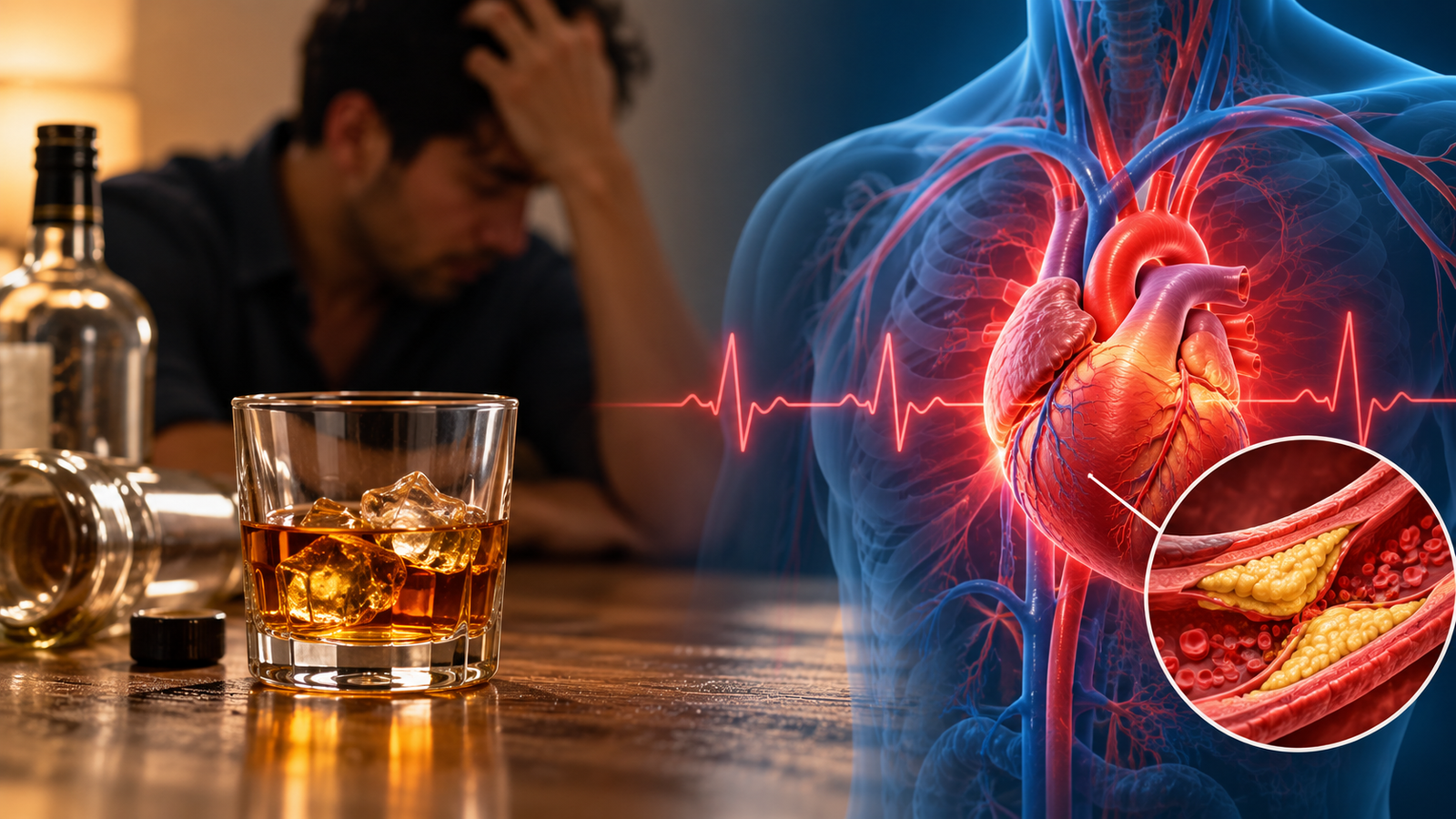
Many people worry about alcohol and the liver, but far fewer realise how much heavy drinking affects the heart. Cardiologists see the results often: irregular heartbeats, weakened heart muscle, high blood pressure and strokes, sometimes in people who never had liver symptoms at all.
This guide explains what long-term heavy drinking does to the heart, the warning signs, and what recovery for heart health can look like alongside recovery from alcohol. It is general information, not medical advice. Anyone with heart symptoms should see a doctor.
In short
- Long-term heavy drinking can weaken the heart muscle, raise blood pressure, trigger irregular heart rhythms and increase stroke risk.
- A racing or irregular heartbeat after drinking, especially heavy or binge drinking, is a recognised phenomenon sometimes called “holiday heart syndrome”.
- Some alcohol-related heart damage can improve with abstinence, particularly if caught early.
- Heart health should be assessed alongside liver health and the alcohol use disorder itself, not instead of it.
- Chest pain, severe shortness of breath, fainting or a very irregular heartbeat need emergency care.
How heavy drinking affects the heart
The heart is a muscle, and like other muscles it can be damaged by repeated toxic exposure. Cardiology and public-health bodies, including the WHO and the American Heart Association, describe several distinct ways heavy drinking affects it:
1. Weakening the heart muscle (alcoholic cardiomyopathy). Years of heavy drinking can directly damage heart muscle cells, causing the heart to enlarge and pump less effectively. This is one of the recognised causes of a condition called dilated cardiomyopathy, which can lead to heart failure.
2. Irregular heart rhythms (arrhythmias). Alcohol can disturb the heart’s electrical activity. The most common result is atrial fibrillation (AF), a fast, irregular heartbeat that raises the risk of stroke and heart failure. Even people without diagnosed heart disease can develop an irregular heartbeat after a single episode of heavy drinking, a pattern doctors sometimes call “holiday heart syndrome” because it’s often seen after festive or holiday drinking.
3. High blood pressure (hypertension). Regular heavy drinking is a recognised, modifiable cause of high blood pressure. High blood pressure is itself a major driver of heart attacks, stroke and heart failure.
4. Stroke. Heavy drinking raises the risk of stroke, both through raised blood pressure and irregular heart rhythms such as AF, and through direct effects on blood vessels.
5. Effects on cholesterol and triglycerides. Heavy drinking can raise triglyceride levels, and it interacts with diet, weight and other cardiovascular risk factors, compounding overall risk.
You may have read that a small amount of alcohol is good for the heart. Current major health bodies, including the WHO, now say there’s no amount of alcohol that is safe for health, and the World Heart Federation has stated there is no protective threshold once cardiovascular risk overall is considered. Any potential benefit shown in older studies is now understood to be far outweighed by the risks of heavier drinking, so it isn’t a reason to drink or to continue drinking heavily.
Signs and symptoms to watch for
Some symptoms of alcohol-related heart problems are easy to dismiss as tiredness or indigestion, so it’s worth knowing what to look for:
- A racing, fluttering or irregular heartbeat (palpitations)
- Breathlessness, especially on exertion or lying flat
- Swelling in the ankles, feet or abdomen
- Persistent tiredness or reduced ability to exercise
- Chest discomfort or tightness
- Dizziness or fainting
Get emergency help (call 112 or go to the nearest emergency department) for: chest pain or pressure, severe or sudden breathlessness, fainting or loss of consciousness, a very fast or irregular heartbeat that doesn’t settle, or sudden weakness, slurred speech or facial drooping, which can be signs of a stroke.
How doctors check heart health related to alcohol
If you drink heavily, or a doctor is concerned, assessment usually includes:
- Blood pressure measurement, since raised blood pressure often has no symptoms.
- ECG (electrocardiogram), to look for irregular rhythms such as atrial fibrillation.
- Echocardiogram, an ultrasound scan of the heart, to check its size, structure and how well it’s pumping.
- Blood tests, including cholesterol, triglycerides and markers relevant to overall cardiovascular risk.
- Sometimes further heart rhythm monitoring or specialist cardiology assessment, depending on findings.
Can alcohol-related heart damage be reversed?
This depends on how much damage has occurred and for how long.
- Alcohol-related cardiomyopathy in its earlier stages can improve, sometimes substantially, with complete abstinence, and studies have shown improved heart pumping function in many people who stop drinking. In more advanced cases, some damage may be permanent, and ongoing cardiology care is needed either way.
- Blood pressure often falls after stopping or significantly reducing drinking, though it may need medical treatment as well.
- Atrial fibrillation and other rhythm problems may reduce in frequency or severity with abstinence, but some people continue to need cardiology treatment for AF regardless of drinking status.
- Stroke risk falls over time after stopping heavy drinking, though other risk factors, such as blood pressure, cholesterol and AF, still need to be managed.
The overall message from cardiology guidance is consistent: stopping heavy drinking is one of the most effective single things a person can do for their cardiovascular health, whatever stage they’re starting from.
What recovery for heart health can look like
1. Stop drinking, safely. As with liver disease, sudden withdrawal after long-term heavy drinking can be dangerous, particularly for the heart, since withdrawal itself causes a fast heart rate and raised blood pressure. This makes medical supervision especially important for anyone with existing heart problems. See our guide to alcohol withdrawal and medically supervised detox.
2. Cardiology assessment and, where needed, treatment. This might include blood pressure medicines, treatment for AF, or medicines to support a weakened heart. Some of these decisions need to account for other health issues, including liver health, which is another reason a full medical assessment matters, not just addressing the drinking in isolation.
3. Address other cardiovascular risk factors together. Smoking, weight, diabetes and cholesterol all interact with alcohol’s effect on the heart. A doctor can help prioritise these alongside stopping drinking.
4. Treat the alcohol use disorder itself. Heart health, like liver health, depends on staying alcohol-free over time, not just detoxing once. Therapy, medical support and a relapse prevention programme all support that.
5. Ongoing monitoring. Depending on what’s found, a cardiologist may recommend regular follow-up, an echocardiogram at intervals, or monitoring for AF.
Why this matters even without symptoms
Like liver damage, heart damage from alcohol can develop silently. A racing heartbeat after a big night out is often dismissed as a hangover, blood pressure readings at home are rarely checked, and early heart muscle weakening usually has no symptoms at all. By the time breathlessness or swelling appears, the heart has often been under strain for a long time.
If you drink heavily and haven’t had your blood pressure or heart checked recently, that’s worth raising with a doctor, even if you feel completely well.
How Thamarai can help
At Thamarai Healing Center in Pollachi, treatment for alcohol addiction begins with a comprehensive medical and physical assessment, including laboratory testing, so that cardiovascular and other physical health concerns are identified alongside the psychiatric, nutritional and lifestyle picture. Our multidisciplinary team includes a senior consultant cardiac surgeon, so heart health is considered as part of your overall care, not as an afterthought. From medically supervised detoxification through to alcohol addiction treatment and relapse prevention, the goal is care that protects your whole health, not only your relationship with alcohol. You can read more about our team.
If you’re concerned about your drinking or your heart, a confidential conversation is a good place to start. Speak to our team →
Frequently asked questions
Can drinking alcohol cause an irregular heartbeat?
Yes. Heavy or binge drinking can trigger a fast, irregular heartbeat, sometimes called “holiday heart syndrome”, and long-term heavy drinking increases the risk of atrial fibrillation.
Is a small amount of alcohol good for the heart?
Major health bodies, including the WHO, now say there is no amount of alcohol that is safe for health, and no protective threshold once overall cardiovascular risk is considered. It isn’t a reason to drink or continue drinking.
Can the heart recover after someone stops drinking?
Often, yes, at least partially, particularly with earlier-stage damage and complete abstinence. Some damage, especially if longstanding, may not fully reverse, and ongoing cardiology care may still be needed.
How do I know if drinking has affected my heart?
Many people have no symptoms. Blood pressure checks, an ECG and, where indicated, an echocardiogram are the way to find out, not how you feel day to day.
Is heart damage from alcohol separate from liver damage?
They’re different organs and different mechanisms, but both are driven by the same heavy drinking, and doctors usually assess both, along with overall health, together.
What should I do if I have chest pain or a racing heart after drinking?
Chest pain, severe breathlessness, fainting or a persistently fast or irregular heartbeat need urgent medical attention. Call 112 or go to the nearest emergency department.
This article is for general information and isn’t a substitute for professional medical advice, diagnosis or treatment.
Sources
- World Health Organization. No level of alcohol consumption is safe for our health (statement) and Global status report on alcohol and health.
- World Heart Federation. Policy Brief: The Impact of Alcohol Consumption on Cardiovascular Health.
- American Heart Association / American College of Cardiology. Scientific statements on alcohol and cardiovascular disease.
- Piano MR. Alcoholic Cardiomyopathy: Incidence, Clinical Characteristics, and Pathophysiology. Chest, 2002 (and subsequent reviews).
- NIAAA. Alcohol’s Effects on the Body (cardiovascular system).
- NICE. Hypertension in adults: diagnosis and management (NG136).