
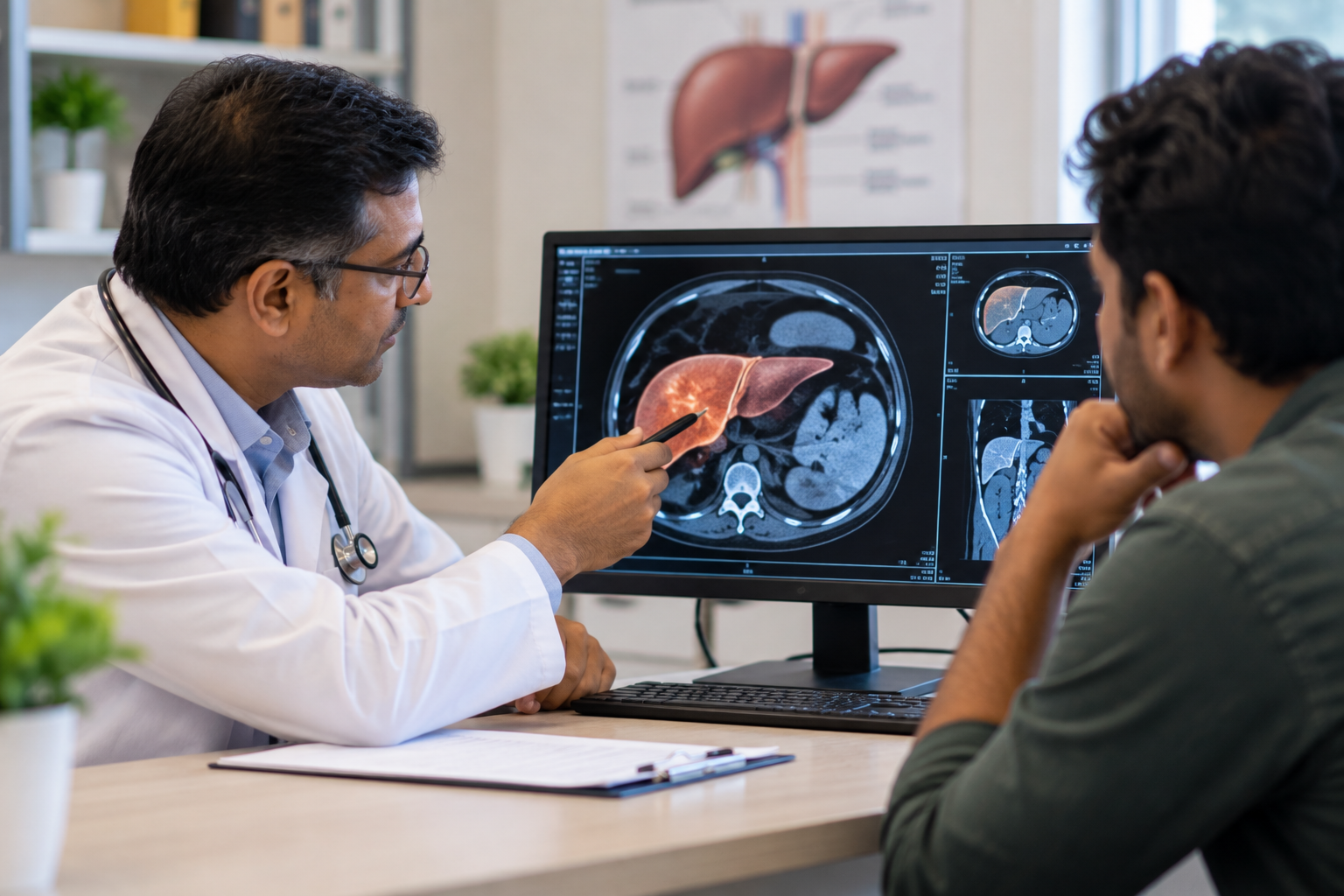
The liver rarely complains. It can be badly harmed by alcohol over years with few, if any, symptoms, which is why so many people first hear about liver damage from a blood test, a scan, or an emergency.
This guide explains how alcohol harms the liver, the stages of damage, the warning signs, how doctors check, and what recovery can realistically look like at each stage. It is general information, not medical advice. Anyone worried about their liver should see a doctor.
In short
- Alcohol harms the liver in stages: fatty liver, alcohol-related hepatitis, and scarring (fibrosis and cirrhosis).
- Early damage often causes no symptoms. You can’t judge your liver by how you feel.
- Stopping alcohol is the most important step at every stage. Early damage can improve substantially; scarring is largely permanent, but stopping still improves outcomes.
- How much recovery is possible depends on the stage and on individual health, so it varies from person to person.
- Treating the drinking itself is part of treating the liver.
How alcohol harms the liver
The liver does the work of breaking alcohol down. In the process it produces toxic by-products, and with heavy, repeated drinking they trigger fat build-up, inflammation and cell injury. Over time the liver tries to repair itself, and repeated injury can lead to scar tissue replacing healthy tissue.
Not everyone who drinks heavily develops severe liver disease, and researchers don’t fully understand why some people are affected more than others. Factors that are known to raise risk include:
- How much and for how long someone drinks. Long-term heavy drinking carries the highest risk.
- Sex. Women can develop alcohol-related liver damage at lower levels of drinking than men, according to NIAAA.
- Overweight, diabetes and metabolic conditions. Fatty liver from these causes (sometimes called MASLD) is increasingly common, and alcohol on top of it can speed up damage.
- Viral hepatitis (B or C). These infections and alcohol damage the liver together. Screening matters.
- Genetics, smoking and poor nutrition, which also play a part.
The stages of alcohol-related liver disease
The stages can overlap, and a person can move between them.
| Stage | What is happening | Typical symptoms | Can it improve? |
|---|---|---|---|
| Alcohol-related fatty liver | Fat builds up inside liver cells | Often none. Sometimes tiredness or discomfort under the right ribs | Often yes. In many people it improves substantially within weeks to months of stopping alcohol |
| Alcohol-related hepatitis | The liver becomes inflamed and cells are injured | Yellowing of skin and eyes (jaundice), fever, nausea, loss of appetite, abdominal pain. It can be mild or severe | It can improve with abstinence and treatment, but severe cases are life-threatening and need urgent hospital care |
| Fibrosis | Scar tissue begins to form | Usually none | Early scarring may improve if drinking stops, but the response varies |
| Cirrhosis | Extensive scarring changes the structure of the liver and reduces its function | Can be silent at first (“compensated”), then fluid swelling, jaundice, bleeding, confusion (“decompensated”) | Existing scarring is largely permanent, but stopping alcohol slows or halts progression and improves survival |
Cirrhosis raises the risk of serious complications, including fluid in the abdomen (ascites), bleeding from swollen veins in the gullet (varices), confusion caused by toxins the liver can no longer clear (hepatic encephalopathy), infections and liver cancer.
Signs and symptoms to watch for
Early liver damage is usually silent. As it advances, symptoms can include:
- Persistent tiredness and weakness
- Loss of appetite, nausea, weight loss
- Yellowing of the skin or whites of the eyes (jaundice)
- Swelling of the legs, ankles or abdomen
- Easy bruising or bleeding
- Dark urine or pale stools
- Itching
- Confusion, drowsiness or a change in sleep pattern
Get urgent medical help (call 112 or go to the nearest emergency department) if there is: vomiting blood or material like coffee grounds, black tarry stools, sudden confusion or extreme drowsiness, a high fever with abdominal pain, or rapidly increasing jaundice or abdominal swelling.
How doctors check the liver
If you drink heavily or are worried, ask your doctor about a liver check. It usually starts with:
- Blood tests, including liver function tests and a blood count, to look for signs of injury and reduced function.
- Ultrasound, which can show fat, changes in liver texture and complications.
- Elastography (for example, FibroScan), a painless test that estimates liver stiffness, an indicator of scarring.
- Screening for viral hepatitis and other liver conditions.
- Sometimes a biopsy, or other imaging, if the picture is unclear.
Normal blood tests don’t rule out liver damage, especially early on, so it’s worth discussing your drinking honestly with the doctor.
What recovery can look like
Recovery means different things at different stages, and it’s better to speak honestly about that than to promise too much.
1. Stop drinking, safely. This is the single most important step, and doctors recommend complete avoidance of alcohol for anyone with liver disease. If you are physically dependent on alcohol, stopping suddenly can cause dangerous withdrawal, and the sedative medicines used in detox need extra care when the liver is unwell. Speak to a doctor first. Our guide to alcohol withdrawal and medically supervised detox explains why.
2. Treat the drinking, not only the liver. Liver treatment works best when the alcohol use disorder is treated alongside it. Without that, the risk of returning to drinking, and to further liver damage, stays high. Therapy, medical support and a relapse prevention programme all help.
3. Nutrition. People with liver disease are often under-nourished. A dietitian or doctor can advise on food, and doctors often prescribe vitamins such as B1 (thiamine).
4. Regular medical follow-up. Doctors monitor blood tests and scans, and for people with cirrhosis they check for complications, including screening for varices and regular ultrasound surveillance for liver cancer.
5. Careful use of medicines and supplements. A damaged liver can react badly to some medicines, herbal preparations and supplements. Always tell your doctor everything you take, and check before starting anything new.
6. Vaccination and infection care. Doctors commonly recommend protection against hepatitis A and B for people with chronic liver disease.
7. Advanced disease. Some people with severe, end-stage liver disease are assessed for a liver transplant. Transplant centres look at both the liver condition and the person’s ability to stay alcohol-free, and support for alcohol use disorder is part of that assessment.
Can the liver heal itself?
The liver has a remarkable ability to regenerate, and this is why early damage can improve. But regeneration has limits. Where scarring is extensive, the structure of the liver can’t fully return to normal.
Even then, the message isn’t hopeless. Studies of people with alcohol-related cirrhosis show that those who stop drinking generally do better than those who continue, and that stopping is linked with better survival and fewer complications. The earlier someone stops, the more liver function there usually is left to protect.
Why timing matters
- Fatty liver is the stage with the most room to improve.
- Hepatitis can be serious, and treatment shouldn’t be delayed.
- Cirrhosis is about protecting the liver you still have and preventing complications.
Waiting for symptoms often means waiting until damage is advanced. If you’ve been drinking heavily for a long time, an assessment now is worth more than waiting to feel unwell.
How Thamarai can help
At Thamarai Healing Center in Pollachi, alcohol treatment starts with a comprehensive medical and physical assessment, including laboratory tests, before psychiatric, nutritional and lifestyle assessments. Our multidisciplinary team includes a senior hepatobiliary and liver transplant specialist alongside psychiatrists and physicians, so liver health is considered from the start. From medically supervised detoxification to alcohol addiction treatment and aftercare, the aim is care that treats both the drinking and its effects on your body. You can read about our team here.
If you’re concerned about your drinking or your liver, a confidential conversation is a good place to start. Speak to our team →
Frequently asked questions
Can you have liver damage from alcohol and not know it?
Yes. Early stages, including fatty liver and even early scarring, often cause no symptoms, and blood tests can look normal.
Is alcohol-related liver damage reversible?
It depends on the stage. Fatty liver often improves substantially after stopping alcohol. Hepatitis can improve but may be severe. Established cirrhosis is largely permanent, though stopping alcohol still slows or halts progression and improves outcomes.
How long does it take for the liver to recover after stopping alcohol?
It varies. Fatty liver can improve within weeks to months. For more advanced disease, recovery is slower and may be incomplete, and doctors monitor progress over time.
Do I have to stop drinking completely if I have liver disease?
Doctors advise complete avoidance of alcohol for people with alcohol-related liver disease, because any continued drinking risks further damage.
Is it safe to stop drinking suddenly if my liver is damaged?
Not without medical advice. If you’re dependent on alcohol, sudden withdrawal can be dangerous, and liver disease affects which medicines are safe. A doctor should plan it.
Do I need a liver transplant?
Most people with alcohol-related liver disease don’t. Transplant is considered for a small group with severe, end-stage disease, and only after specialist assessment.
This article is for general information and isn’t a substitute for professional medical advice, diagnosis or treatment.
Sources
- NIAAA. Alcohol’s Effects on the Body (liver) and Treatment for Alcohol Problems: Finding and Getting Help.
- EASL Clinical Practice Guidelines: Management of alcohol-related liver disease. Journal of Hepatology, 2018.
- Crabb DW et al. Diagnosis and Treatment of Alcohol-Associated Liver Diseases: 2019 Practice Guidance from the AASLD. Hepatology, 2020.
- NICE. Cirrhosis in over 16s: assessment and management (NG50).
- NICE. Alcohol-use disorders: diagnosis and management of physical complications (CG100).
- WHO. Global status report on alcohol and health and treatment of substance use disorders.